
East of Sudan
1964
No user ratings available yet
Representation score: 1.1 out of 10
Representation Score
Minimal
1963
Director
Georges Lampin
Runtime
105 minutes
Average Rating
No ratings yetNew Showbiz Analysis
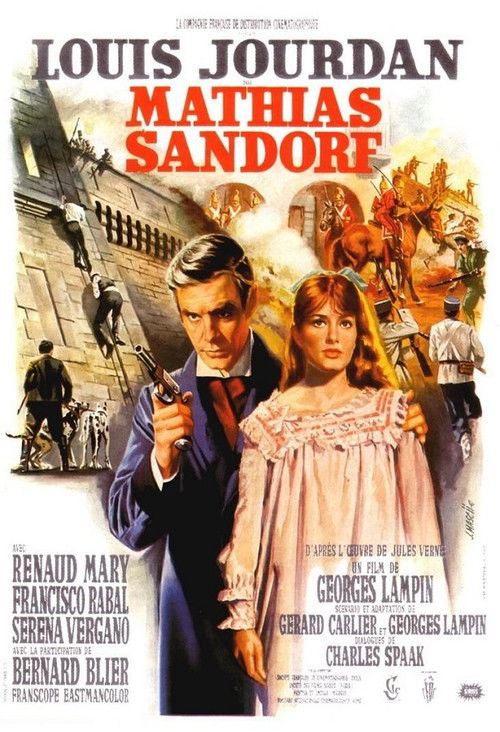
Mathias Sandorf is a traditional adventure film that prioritizes individual heroism and classic genre clichés over social deconstruction. The narrative relies on established hierarchies of class and gender to drive its swashbuckling plot. While the film addresses the tension between the individual and the state, it frames this struggle through personal honor rather than a systemic interrogation of power. This results in a conservative approach to representation. Ultimately, the production functions as a genre-driven escapist piece, adhering to the period-specific constraints of both its 19th-century setting and its 1960s production era.
Category Breakdown
The film assumes everyone is straight and does not include any LGBTQ+ characters or narratives that challenge traditional romantic structures.
The story is driven by a male protagonist whose actions propel the plot forward. Female characters mainly serve as emotional support or figures in need of protection, rather than active drivers of political action.
The cast is predominantly white and European, reflecting the era's cinematic norms. Despite a Mediterranean setting, the film focuses on aristocratic and revolutionary classes, resulting in a homogeneous demographic.
Themes of political upheaval and dictatorship are explored through individual justice and personal vengeance. The film lacks a systemic critique of institutions, presenting a binary morality of heroism versus tyranny.
There is no focus on neurodivergence, physical disability, or chronic illness. Characters are defined by the physical capabilities required for the adventure genre.
Present on Screen
Limited or Absent
Official Synopsis
1868. Revolutionary Mathias Sandorf is determined to oust the dictatorship oppressing his country. The people see him as their liberator. Denounced by his banker, Mathias is arrested and sentenced to death. He manages to escape and takes refuge in a fishing village where he prepares a new uprising.
1964

1959
2006

1964

1946

1948

1956

1932
No reviews yet. Be the first to share your thoughts on this movie!
Use the rating form above to leave a star rating and optional review.