Safari
1956
No user ratings available yet
Representation score: 0.6 out of 10
Representation Score
Minimal
1956
PassedDirector
George Blair
Runtime
66 minutes
Average Rating
No ratings yetNew Showbiz Analysis
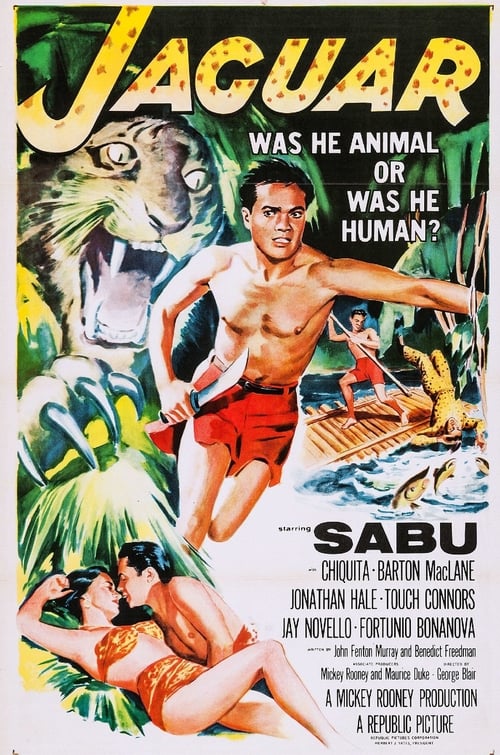
Jaguar (1956) is a conventional mid-century adventure-drama that emphasizes mystery and expeditionary themes over social issues. The film reinforces the era's established social hierarchies by prioritizing Western discovery and mastery of the environment. The narrative centers on Western explorers in a South American setting, maintaining a colonial perspective. This focus limits the ability to act of indigenous characters and keeps the storytelling rooted in Western discovery and mastery of the environment. Ultimately, the film offers little disruption to the status quo, relying on traditional gender roles and a lack of diverse representation typical of its historical context.
Category Breakdown
The film does not include any LGBTQ+ characters or narratives. Romantic relationships follow traditional heterosexual norms typical of 1950s cinema.
Gender dynamics reflect mid-century conventions. Female characters mainly serve as romantic interests or secondary figures to the male-led expedition, emphasizing male leadership and female dependency.
The cast is mostly of European descent, focusing on Western explorers. The South American setting highlights the outsiders' perspective, with the indigenous 'jungle boy' serving as a plot catalyst rather than a complex character.
The narrative upholds a Western discovery perspective, lacking critiques of Western institutions or secularism. It adheres to traditional storytelling values.
There are no visible or invisible disabilities portrayed with significant roles. No characters have identities defined by physical or neurodivergent conditions.
Present on Screen
Limited or Absent
Official Synopsis
Oil explorers suspect a South American jungle boy of murder.
1956

1954

1958

1950

1949
1953

1954

1959
No reviews yet. Be the first to share your thoughts on this movie!
Use the rating form above to leave a star rating and optional review.