Lightning Carson Rides Again
1938
No user ratings available yet
Representation score: 0.7 out of 10
Representation Score
Minimal
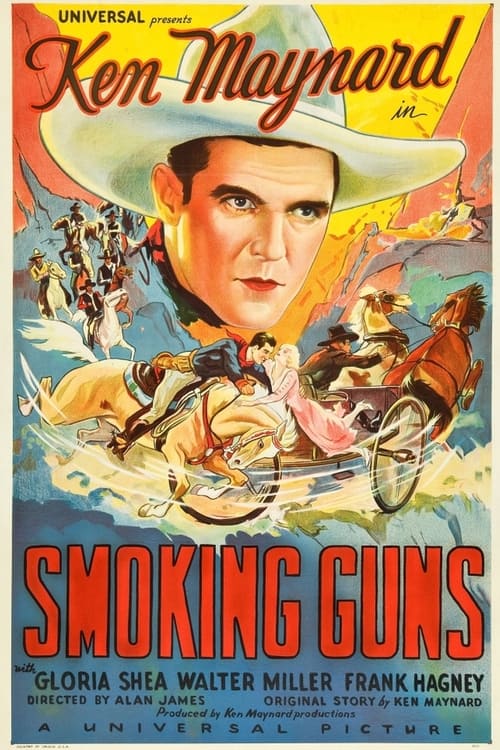
1934
ApprovedDirector
Alan James
Runtime
62 minutes
Average Rating
No ratings yetNew Showbiz Analysis
Smoking Guns is a product of the 1930s studio system, emphasizing traditional Western genre clichés. The narrative structure focuses on a single male hero's journey to reclaim his identity and clear his name. The film offers minimal engagement with diverse identities or progressive social frameworks. It functions as a standard period piece centered on individual moral decision-making and the restoration of status within existing social hierarchies. Due to its reliance on conventional masculine archetypes and lack of diverse character descriptions, the film reflects the limited social scope of early sound-era Westerns.
Category Breakdown
The film does not include any characters with non-straight relationships or same-sex intimacy. The story centers on a male protagonist's personal struggle, following the storytelling conventions of the time.
The narrative focuses solely on the male protagonist, Ken. Female characters are not detailed, indicating a strong emphasis on masculine leadership typical of 1930s Western films.
The story transitions from a jungle setting to a Western frontier but does not explicitly feature a diverse cast. It seems to adhere to the homogeneous casting practices of the era.
Themes center around personal justice and restoring honor. The film operates within established Western ideas of merit without questioning social or religious institutions.
There is no information about characters with physical, sensory, or neurodivergent disabilities.
Present on Screen
Limited or Absent
Official Synopsis
Accused of a murder he did not commit, Ken leaves the country. Three years later Evans finds him in the jungle. When Evans dies, Ken seeing the resemblance, assumes his identity and returns to clear his name.
1938
1925
1945
1934
1937
1938
1929
1942
No reviews yet. Be the first to share your thoughts on this movie!
Use the rating form above to leave a star rating and optional review.