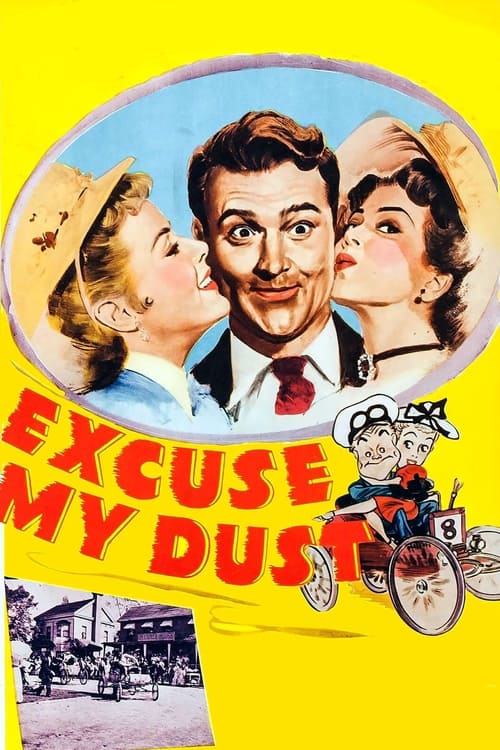
Excuse My Dust
1951
No user ratings available yet
Representation score: 0.4 out of 10

Representation Score
Minimal
1927
PassedDirector
Roy Del Ruth
Runtime
75 minutes
Average Rating
No ratings yetNew Showbiz Analysis
The First Auto is a comedy that focuses on traditional humor and the societal changes of the 1920s. The story centers on the shift from horse-drawn carriages to automobiles, highlighting the disruption within families. However, it does not explore diverse perspectives or identities. Produced during the 1920s, the film upholds the conventions of its time. Its emphasis on a father-son relationship reflects a patriarchal viewpoint that does not address varied identities or social issues. Overall, the film serves as a typical silent-era comedy, reflecting the homogeneous standards of its era without challenging established norms.
Category Breakdown
The film does not include any characters with non-straight sexual orientations or gender identities. It adheres to the social norms of the 1920s.
The main storyline revolves around a father-son relationship, emphasizing traditional male roles and family hierarchies.
The film probably follows the casting practices typical of the silent era, which were predominantly white and Western-focused.
The plot examines technological advancements through family conflicts, reinforcing traditional family values without challenging Western cultural norms.
There are no characters with physical or neurological differences in the film. The narrative does not depict any individuals with disabilities.
Present on Screen
Limited or Absent
Official Synopsis
The transition from horses to automobiles at the turn of the century causes problems between a father and son.
1951
1928
1931
1971
1929
1927

1922
1923
No reviews yet. Be the first to share your thoughts on this movie!
Use the rating form above to leave a star rating and optional review.