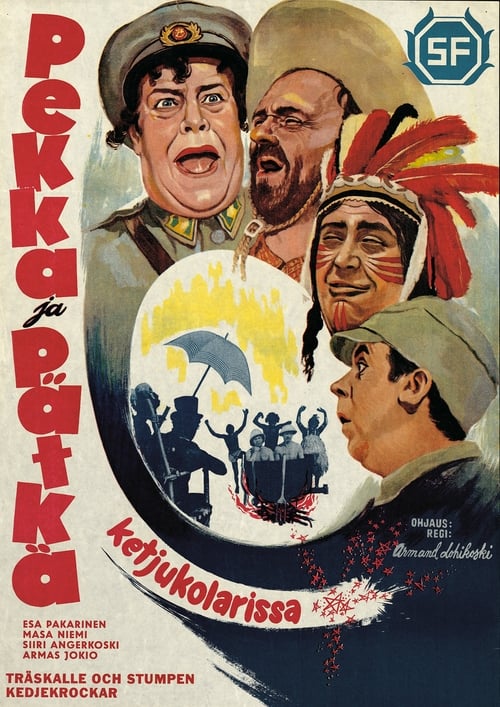
Pekka ja Pätkä ketjukolarissa
1957
No user ratings available yet
Representation score: 1.8 out of 10
Representation Score
Limited
1952
Director
Matti Kassila
Runtime
95 minutes
Average Rating
No ratings yetNew Showbiz Analysis
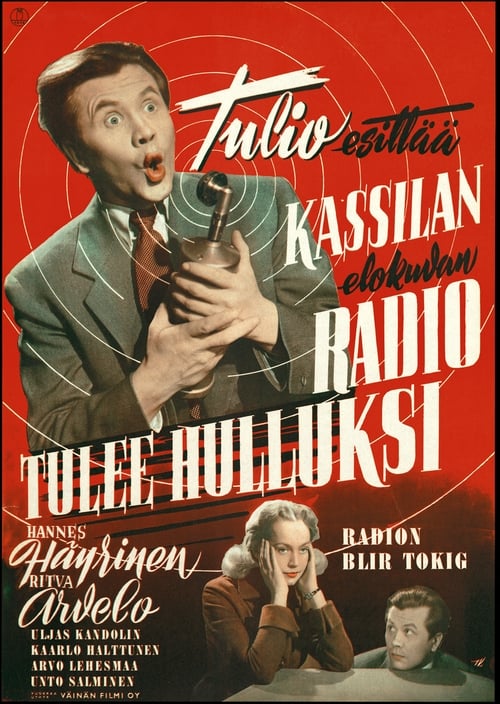
Radio tulee hulluksi is a product of its mid-century Finnish era, featuring a cast that lacks racial or LGBTQ+ diversity. The story centers on a male protagonist's professional and personal crisis, adhering to traditional social structures and gender roles. However, the film offers a subtle critique of institutional authority. By portraying a man's experimental methods as symptoms of madness, the narrative questions the rigid definitions of sanity and social conformity. While the film explores themes of neurodivergence, it does so through a lens that may rely on comedic clichés regarding mental instability. It functions more as a satire of systemic power than a study of underrepresented identities.
Category Breakdown
The film does not include any LGBTQ+ characters or stories. The main storyline revolves around a traditional marriage between Toivo and Eila.
The story is driven by a male protagonist's struggle against authority. Although Eila plays a significant role as a witness, her character remains secondary to the male-led conflict.
Reflecting its 1952 Finnish setting, the film features a cast that is racially uniform. There is no indication of diverse ethnic identities or non-white actors.
The film criticizes institutional power by depicting professional innovation as insanity. This satire questions the idea that medical establishments are always right.
Mental health is a central theme, but the film risks using the 'madman' archetype for humor. The protagonist's ability to take action is diminished by the psychiatric institution.
Present on Screen
Limited or Absent
Official Synopsis
Radio reporter Toivo Teräsvuori gets an idea for an experimental report using a hidden microphone, but he is reported as a madman talking to himself and is taken to the Houruniemi mental hospital. At the hospital, the volatile Toivo is considered insane, and even his wife Eila's testimony does not help the matter. Instead, Professor Piukka orders Toivo to undergo brain surgery.
1957
1969
1985
1953
1949
1954
1971
1922
No reviews yet. Be the first to share your thoughts on this movie!
Use the rating form above to leave a star rating and optional review.