Passover Fever
1995
No user ratings available yet
Representation score: 5.3 out of 10
Representation Score
Fair
2003
Director
Yossi Madmoni , David Ofek
Runtime
102 minutes
Average Rating
No ratings yetNew Showbiz Analysis
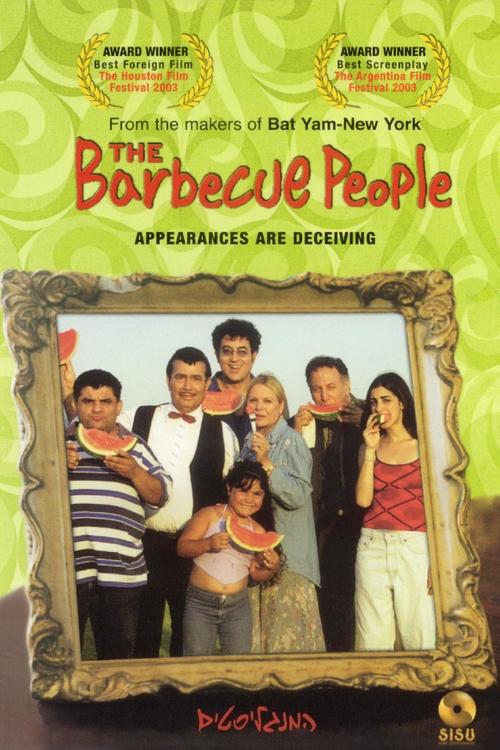
The Barbecue People is a work of social realism that challenges the uniformity of national identity. It succeeds by centering the Mizrahi diaspora, using ancestral backstories to disrupt monolithic views of history. The film's non-linear structure intertwines contemporary domestic life with historical trauma. This approach dismantles the idea of a seamless national identity by highlighting the varied, often conflicting, personal histories of an Iraqi-Israeli family. While the film excels in ethnic specificity, it lacks representation in other key areas. The focus remains heavily on traditional family dynamics and historical displacement rather than broader social diversities.
Category Breakdown
The film focuses on traditional family structures without showing any LGBTQ+ characters. Although personal weaknesses could allow for nuanced identity depictions, there are no stories that explore non-straight relationships.
Both men and women are shown on equal footing through their individual struggles. The film avoids the typical patriarchal stereotype, offering a fragmented and complex view of gender roles within the home.
The narrative gives significant importance to the experiences of Mizrahi people. By focusing on an Iraqi-Israeli family, it challenges Eurocentric dominance and highlights an ethnic identity often overlooked in national discussions.
The film questions the idea that national celebrations can heal systemic trauma. It contrasts an Independence Day picnic with personal dysfunction, presenting characters through their specific weaknesses rather than stereotypes.
There is no specific mention of visible or neurodivergent disabilities. While the film explores psychological weaknesses, these are not used as central plot devices or lenses of ability to act.
Present on Screen
Limited or Absent
Official Synopsis
A family of Iraqi-Israelis, each with his or her own weaknesses and determination, gathers for an Independence Day picnic. Their background stories are presented, reaching back as little as a few days or as far back as the War of Independence and the old country before that, and interlocking in ways that even they never realize.
1995
2017
2004

2017
1998
1999
2004
2020
No reviews yet. Be the first to share your thoughts on this movie!
Use the rating form above to leave a star rating and optional review.