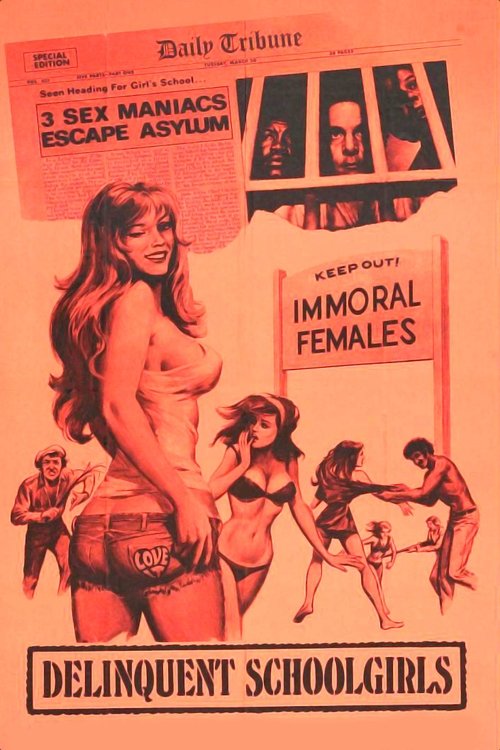
Delinquent Schoolgirls
1975
No user ratings available yet
Representation score: 6.0 out of 10

Representation Score
Good
1974
Director
Stuart Cooper
Runtime
111 minutes
Average Rating
No ratings yetNew Showbiz Analysis
Stuart Cooper’s work is a formal exercise in subversion, prioritizing avant-garde expressionism over demographic breadth. The film succeeds in deconstructing cultural and institutional hierarchies, using its protagonist's radicalized 'party' to challenge established social norms. However, the film lacks meaningful representation in terms of race and ethnicity. The focus remains heavily on a localized, stylized experience that reflects the era's more homogeneous casting practices. Ultimately, the film's strength lies in its intellectual critique of power structures. While it uses psychological states as stylistic devices rather than nuanced disability representation, it remains a potent critique of traditional authority.
Category Breakdown
The film uses metaphor and stylized performance to explore identity and sexual energy. Though it doesn't have explicit LGBTQ+ character arcs, it challenges traditional heterosexual norms through its deconstruction of stability.
The narrative centers on a radicalized exploration of masculinity. By critiquing traditional masculine authority through the metaphor of 'the eunuchs,' the film highlights the absurdity and instability of gender hierarchies.
The production appears to align with the homogeneous casting typical of 1974 experimental cinema. There is no evidence of significant racial or ethnic diversity within the localized London setting.
The film excels in cultural subversion by prioritizing existentialist struggle over religious frameworks. It frames traditional Western institutions and social norms as restrictive forces against individual liberation.
Themes of psychological fragmentation and urban alienation suggest mental health struggles. However, these are presented through an abstract lens rather than through characters with clear roles in driving the story.
Present on Screen
Limited or Absent
Official Synopsis
An art student is thrown out of college. Depressed, he comes up with the Party of Dynamic Erection, a near fascist "party" that promotes male sexual dominance and which attracts a couple of other unsavoury confused characters.
1975

1974
2016
1933
1972
1970

1970
1994
No reviews yet. Be the first to share your thoughts on this movie!
Use the rating form above to leave a star rating and optional review.