Private Eye Popeye
1954
No user ratings available yet
Diversity score: 1.7 out of 10
1956
Director
Seymour Kneitel
Runtime
6 minutes
Average Rating
No ratings yetSynopsis
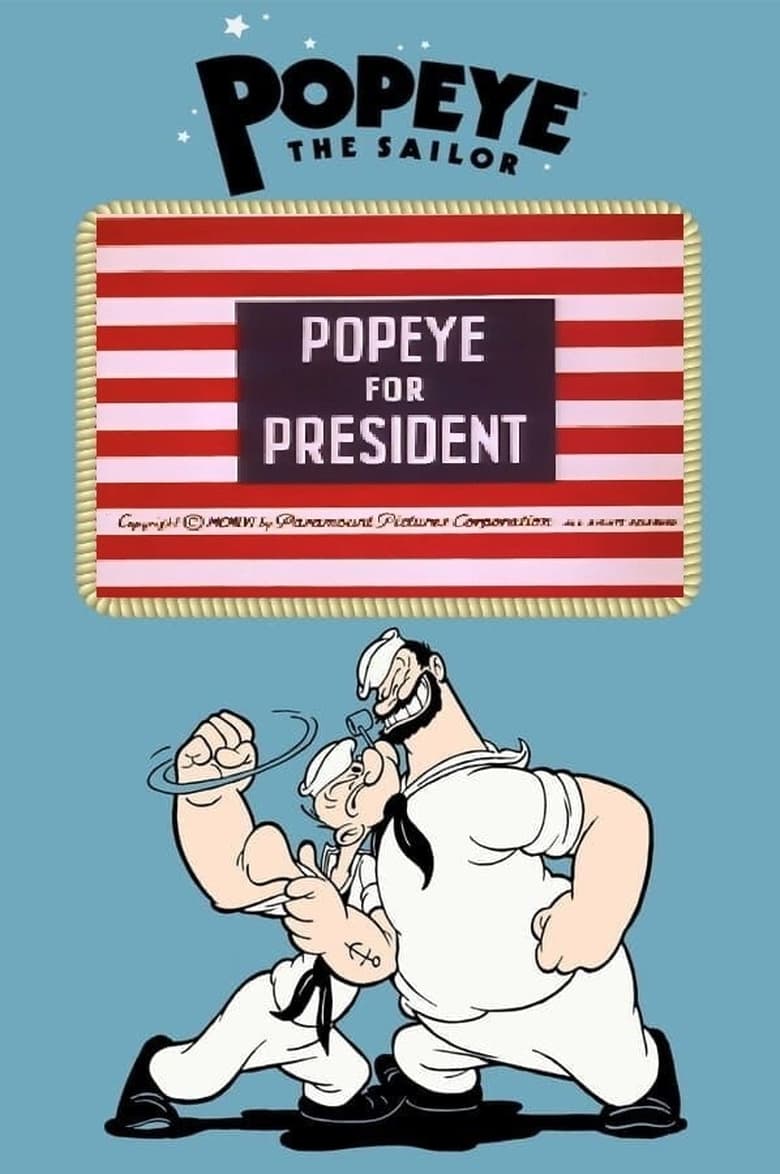
Popeye and Bluto are running for president. It's election day, the vote is tied, and Olive Oyl is the only remaining voter. However, she won't vote until her chores are done. Popeye and Bluto compete to complete them.
Overall Score
Minimal
Category Breakdown
LGBTQ+ Representation
The film contains no LGBTQ+ characters or queer identities. Interpersonal dynamics are strictly limited to a heteronormative framework centered on the main romantic interest.
Gender Representation
Olive Oyl lacks autonomy, serving primarily as a catalyst for male competition. The plot reinforces traditional masculine archetypes of strength and dominance through the rivalry between Popeye and Bluto.
Racial & Ethnic Diversity
Character designs reflect the demographic norms of the 1950s. The cast operates within a homogeneous social framework that lacks diverse ethnic representation or intersectional depth.
Religious & Cultural Diversity
The story uses populist tropes to critique political machines but remains within a conservative narrative alignment. It prioritizes traditional social order and individualist physical prowess over systemic critique.
Disability Representation
There is no meaningful representation of physical or neurodivergent disabilities. Popeye’s use of spinach serves as a standard genre trope for heightened capability rather than a nuanced exploration of disability.
Strengths
Areas for Improvement
AI Analysis
Popeye for President is a product of mid-century animation that prioritizes traditional social hierarchies and archetypal roles. The narrative focuses on a physical rivalry between male protagonists, leaving the female lead in a passive, domestic role. The film lacks intentionality regarding diversity, adhering to the homogeneous demographic standards of the 1950s. It offers a localized satire of political corruption but does not challenge broader systemic or social structures. Ultimately, the work functions as a quintessential example of its era, reinforcing conventional gender and social expectations rather than disrupting them.
1954

1949
1957
1954
1954
1957
1956
1954
1933
1957
1952
1939
No reviews yet. Be the first to share your thoughts on this movie!
Use the rating form above to leave a star rating and optional review.