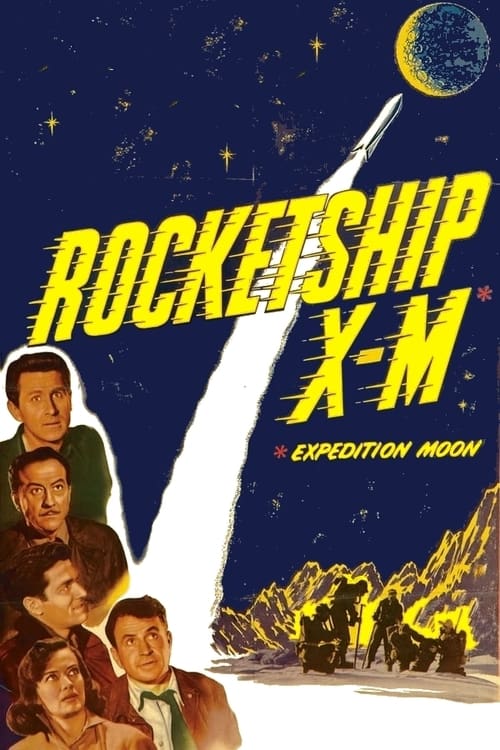
Rocketship X-M
1950
No user ratings available yet
Representation score: 0.5 out of 10

Representation Score
Minimal
1965
UnratedDirector
Curtis Harrington
Runtime
78 minutes
Average Rating
No ratings yetNew Showbiz Analysis
This re-edited version of a Soviet production highlights the mid-century optimism towards science and technology. The narrative focuses on technical achievements and the human struggle against nature rather than social complexity. While the film excels as a survivalist genre piece, it relies on traditionalist archetypes. Character dynamics reinforce the patriarchal and homogeneous standards typical of 1960s speculative fiction. Ultimately, the film lacks the depth of identity-based subversion found in modern cinema, functioning instead as a classic example of period-specific technocratic storytelling.
Category Breakdown
The film does not depict any queer identities or provide subtext related to non-straight relationships. Relationships focus solely on professional cooperation and survival.
Men hold the majority of leadership positions, while women play supporting roles. Dr. Marsha Evans is crucial for communication, but men lead the physical action.
The cast is primarily homogeneous, lacking ethnic diversity. Characters represent a standardized, Western-centric view of scientists common to the time.
The narrative emphasizes mid-century scientific rationalism and technological progress within a traditional framework of exploration. It adheres to conventional social structures without challenging them.
The film does not feature any characters with visible or invisible disabilities. All characters are portrayed as able-bodied experts suited for the demands of space travel.
Present on Screen
Limited or Absent
Official Synopsis
In 2020, after the colonization of the moon, the spaceships Vega, Sirius and Capella are launched from Lunar Station 7. They are to explore Venus under the command of Professor Hartman, but an asteroid collides and explodes Capella. The leader ship Vega stays orbiting and sends the astronauts Kern and Sherman with the robot John to the surface of Venus, but they have problems with communication with Dr. Marsha Evans in Vega. The Sirius lands in Venus and Commander Brendan Lockhart, Andre Ferneau and Hans Walter explore the planet and are attacked by prehistoric animals. They use a vehicle to seek Kern and Sherman while collecting samples from the planet. Meanwhile John helps the two cosmonauts to survive in the hostile land. Re-edited version of Soviet sci-fi Planet of Storms (1962) by Pavel Klushantsev, dubbed into English with additional scenes.
1950
1979
1960

1982
1979
1981
1958
1956
No reviews yet. Be the first to share your thoughts on this movie!
Use the rating form above to leave a star rating and optional review.