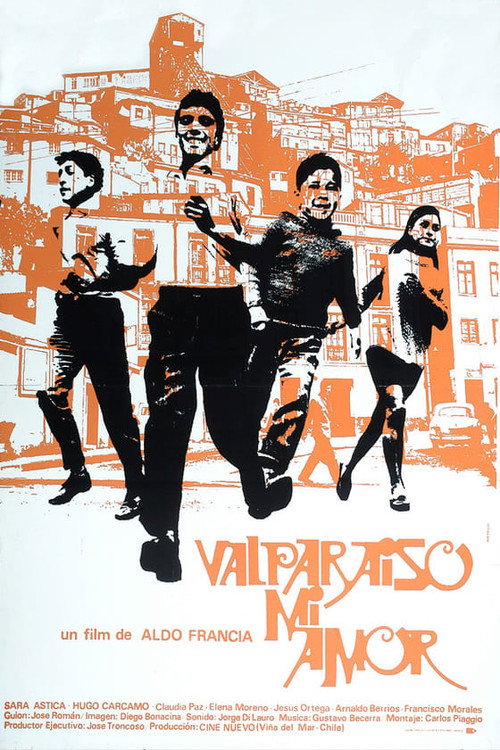
Valparaiso My Love
1969
No user ratings available yet
Representation score: 7.8 out of 10
Representation Score
Fair
1987
UnratedDirector
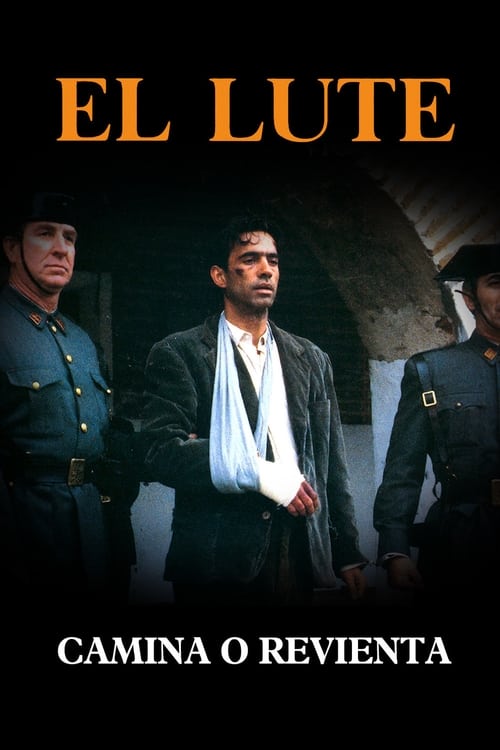
Vicente Aranda
Runtime
123 minutes
Average Rating
No ratings yetNew Showbiz Analysis
Vicente Aranda’s drama succeeds as a piece of social realism by centering the quinqui subculture. By focusing on a nomadic ethnic group, the film disrupts homogeneous historical lenses and provides a nuanced look at systemic exclusion. The film’s strength lies in its critique of institutional authority. It portrays the state as an antagonistic force that criminalizes poverty, moving the conflict away from simple moral binaries toward a study of situational ethics. However, the film lacks diversity in other areas. It does not feature explicit LGBTQ+ representation or disability-focused narratives, and the gender dynamics remain largely centered on the male protagonist’s journey.
Category Breakdown
The film focuses on a traditional common-law partnership between the protagonist and Chelo, without explicitly addressing LGBTQ+ identities or non-cisgender norms. The itinerant domestic structure offers a slight deviation from typical family models.
Gender roles are portrayed through a gritty, survivalist lens within a underrepresented community. Although Chelo is a partner in the itinerant lifestyle, the narrative is primarily driven by the male protagonist's struggle against the state.
The film highlights the quinqui subculture, a nomadic ethnic group in Spain. It provides ability to act to this historically overlooked demographic, presenting their existence through systemic struggles rather than caricatures.
The narrative critically examines the 1960s Spanish legal and penal systems. It frames criminality as a result of poverty, positioning the oppressive social structure as the main antagonist.
There is no significant portrayal of physical or neurodivergent disabilities in this work.
Present on Screen
Limited or Absent
Official Synopsis
In Spain of the 1960s, a poor family of quinquis - a nomadic ethnic group with a tradition as old as that of the gypsises of Spain but with even more obscure origins - have a nomadic life marked by poverty. The son, Eleuterio Sánchez Rodriguez, nicknamed "El Lute", steals some chickens and is condemned to six months in jail. El Lute moves to the slum outskirts of Madrid with his common law wife, Chelo, starting an itinerant life as a peddler of pots and pans and living in a quinqui shantytown. He gradually embarks upon as life of petty criminality, eventually participating in the theft of a jewelry store during which a bystander is killed.
1969
1984
1972
1950
2005
1970
1998
2008
No reviews yet. Be the first to share your thoughts on this movie!
Use the rating form above to leave a star rating and optional review.