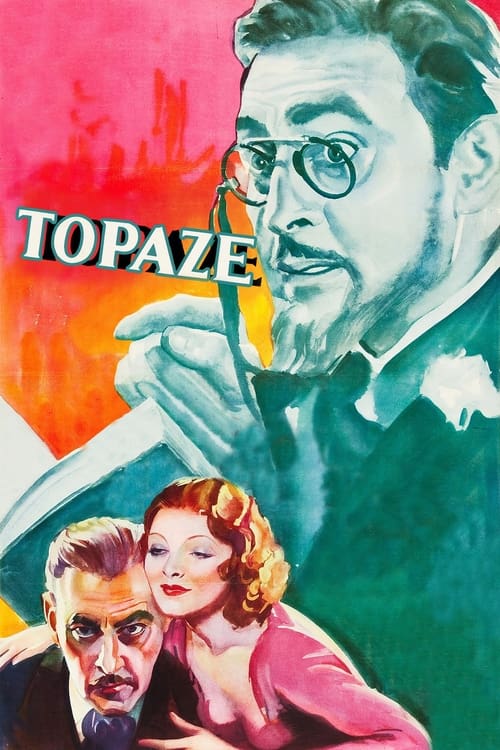
Topaze
1933
No user ratings available yet
Representation score: 2.2 out of 10

Representation Score
Minimal
1934
Director
Pierre Colombier
Runtime
110 minutes
Average Rating
No ratings yetNew Showbiz Analysis
The film's value lies in its institutional critique rather than demographic variety. It disrupts expectations of justice by portraying the state and financial elite as interconnected entities of questionable morality. While the work lacks modern multi-layered markers regarding race, orientation, or disability, its narrative structure leans toward a skepticism of traditional power structures. This creates a complex, morally relativistic view of the social order. The story uses the real-world Stavisky Affair to suggest that the boundaries between criminal activity and state affairs are porous, challenging the perception of governmental infallibility.
Category Breakdown
The film focuses on traditional domestic and professional structures. There are no indications of LGBTQ+ identities or narratives critiquing the assumption that everyone is straight or cisgender.
Fernande Génissier plays a significant role in driving the story through her dissatisfaction with her husband's lack of ambition. While Madame Génissier represents a traditional moral archetype, the plot shifts power dynamics within a woman-led business.
The setting reflects the homogeneous social strata of 1930s Paris. There is no evidence of intentional racial blending or non-Anglo-Saxon majority casting.
The narrative challenges the sanctity of state institutions by framing the government and banking systems as potentially corrupt. It highlights a tension between individual morality and institutional ethics.
There is no documented evidence of characters with physical or neurodivergent disabilities being integrated into the narrative arc.
Present on Screen
Limited or Absent
Official Synopsis
Banker Jules Taffard, a true financier, is a shrewd money-handler. Imprisoned for an alleged swindle, his trial seems to be upsetting those in the government, who may not be so far removed from Taffard's affairs (Affaire Alexandre Stavisky). He escapes from La Santé prison without any difficulty, and the authorities don't seem to be doing anything to find him... Under the false name of Gédéon, he becomes a modest handyman in a corset shop run by Madame Génissier, whose morality is as pious as it is legendary. Her son, Hector Génissier, is a foolish young man with no ambition, much to the regret of his young wife, Fernande Génissier. But it won't be long before Gédéon shows his skills in expanding the modest family business. How far can Gédéon's ascent go before Taffard's voice resounds through Gédon?
1933
1974
1937
1931
1961
1940
1942
1947
No reviews yet. Be the first to share your thoughts on this movie!
Use the rating form above to leave a star rating and optional review.