Little Treasure
1985
No user ratings available yet
Representation score: 5.2 out of 10
Representation Score
Fair
1987
PGDirector
Martin Rosen
Runtime
96 minutes
Average Rating
No ratings yetNew Showbiz Analysis
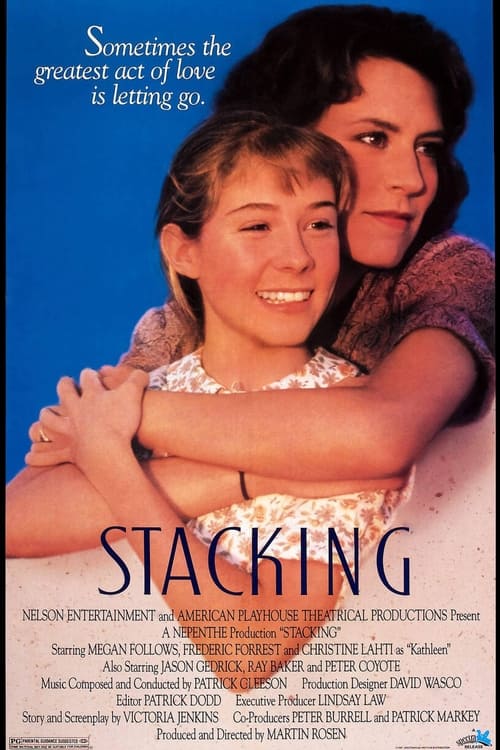
Stacking is a period drama that leans heavily into conventional mid-century Americana. The narrative structure relies on traditional formulas of rural struggle and family preservation, which limits its multi-layered depth. While the film provides a window into a teenage girl's economic struggles, it lacks significant representation of diverse racial or LGBTQ+ identities. The setting and plot suggest a focus on a homogeneous social landscape. Ultimately, the film functions as a character study of survival rather than a critique of broader social structures. It adheres to the era's standard narrative norms without pushing for more complex themes.
Category Breakdown
The film does not show any visible LGBTQ+ characters taking control or having intimate relationships. Set in 1954 Montana, the story follows the assumption that everyone is straight or cisgender without questioning traditional social structures.
A teenage girl becomes the main economic provider after her father gets hurt. This shows she plays a significant role in driving the story, which might challenge the usual male-dominated family farm setting.
The story focuses on a mid-century rural Montana farm, suggesting a mostly white population. There is no evidence of diverse racial backgrounds or mixed cultural identities in the plot.
The narrative centers on preserving a traditional family legacy and institution. While it presents a realistic view of an alcoholic employee, it does not offer broader cultural or secular critiques.
The plot starts with the father's physical injury. It is unclear if his disability gives him a significant role in the story or if it just drives the protagonist's journey.
Present on Screen
Limited or Absent
Official Synopsis
After her father is injured, a teenager and an alcoholic employee struggle to save their financially troubled farm in 1954 Montana.
1985

1986

1979

1984

1983
1955

1985
1984
No reviews yet. Be the first to share your thoughts on this movie!
Use the rating form above to leave a star rating and optional review.