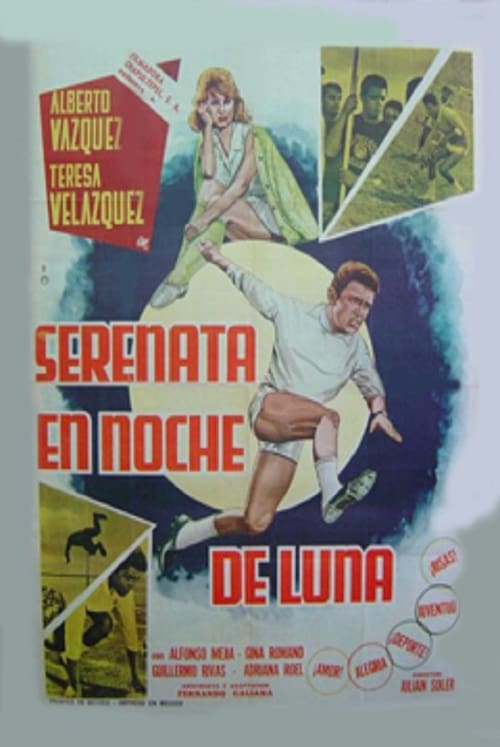
Serenata en noche de luna
1967
No user ratings available yet
Representation score: 2.9 out of 10

Representation Score
Limited
1964
Director
Julián Soler
Average Rating
No ratings yetNew Showbiz Analysis
La juventud se impone is a mid-1960s Mexican comedy that reflects the traditional commercial cinema of its time. It centers on the Rock 'n' Roll era, focusing on youth culture and mainstream entertainment. The film mirrors the social and cultural norms of its era without challenging them. It lacks evidence of diverse representation or the subversion of established hierarchies, suggesting a narrative designed for social cohesion. Overall, the production adheres to conventional frameworks, providing a snapshot of 1960s Mexican commercial values without significant demographic disruption.
Category Breakdown
The film does not include characters with LGBTQ+ identities or narratives. It follows the typical straight-centered social structures common in 1960s musical comedies.
Women like Patricia Conde are part of the cast, but they likely play supporting or romanticized roles. The film seems to uphold traditional gender hierarchies without challenging them.
As a Mexican production, the film reflects its domestic demographics. However, it does not show efforts to subvert ethnic hierarchies or use color-blind casting practices.
The film focuses on youth culture and the Rock 'n' Roll movement. It operates within established social frameworks, emphasizing traditional cohesion over radical systemic critique.
There is no information available about the depiction of characters with physical or neurodivergent disabilities.
Present on Screen
Limited or Absent
1967
1963

1971

1960

1965
1952
1966

1966
No reviews yet. Be the first to share your thoughts on this movie!
Use the rating form above to leave a star rating and optional review.