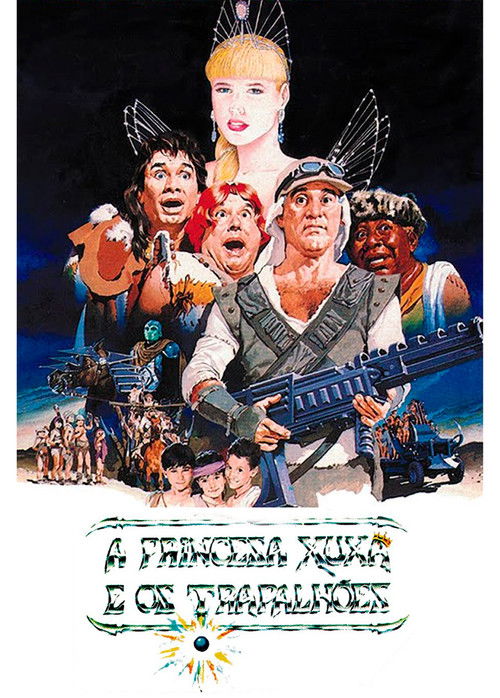
A Princesa Xuxa e os Trapalhões
1989
No user ratings available yet
Diversity score: 2.9 out of 10
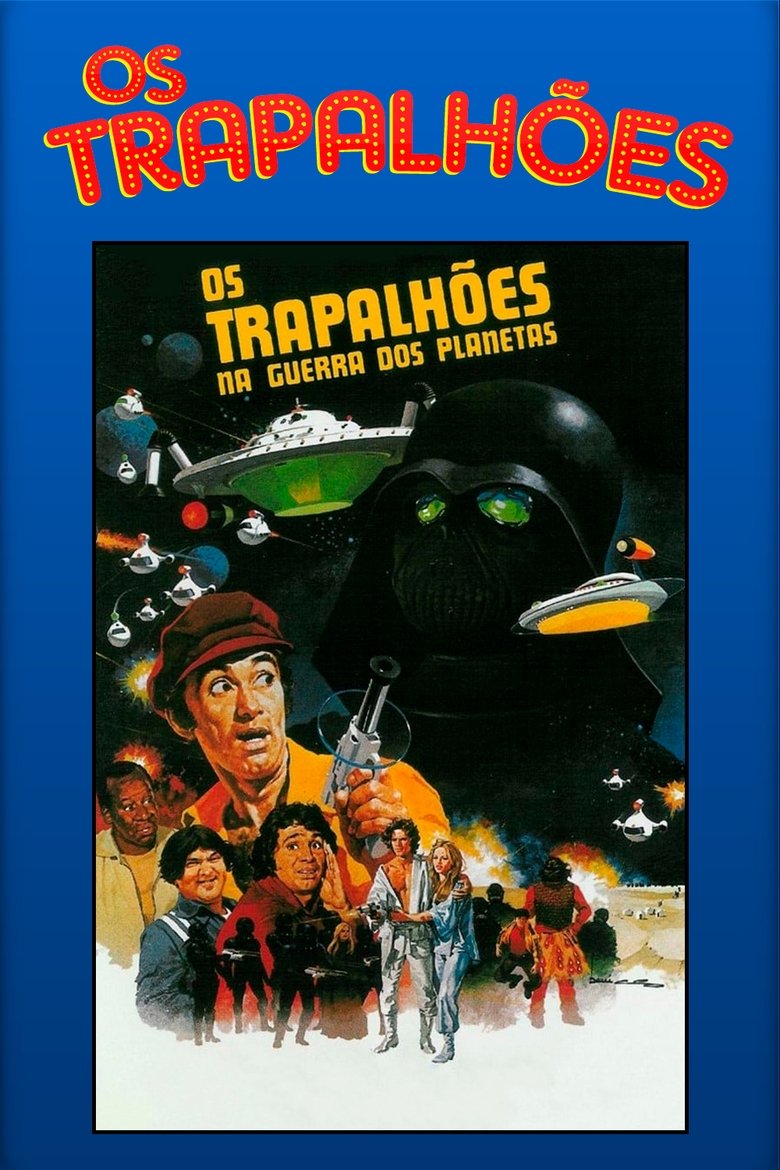
1978
Director
Adriano Stuart
Runtime
98 minutes
Average Rating
No ratings yetSynopsis
Coming from outer space, Prince Flick asks the Trapalhões to help him free his planet from the domain of evil Zuco and free Princess Myrna, who has been taken prisoner. He offers a reward, the four friends accept the mission and embark in a spaceship driven by a hairy monster called Bonzo. Once on the planet, they they defeat Zuco, but they fail to save Princess Myrna's life. Her place on the throne is then taken by Loya, the girlfriend Didi met on that planet. Back on Earth, os Trapalhões think their adventure was but a dream, but they are convinced otherwise when they find their reward.
Overall Score
Limited
Category Breakdown
LGBTQ+ Representation
The film lacks explicit LGBTQ+ characters or narratives. Romantic elements involving Prince Flick, Princess Myrna, and Loya follow traditional heteronormative structures.
Gender Representation
Female characters primarily serve as catalysts for the male protagonists' adventures. The plot relies on the 'damsel in distress' trope through Princess Myrna's imprisonment.
Racial & Ethnic Diversity
As a Brazilian production, the film offers a non-Western perspective. The inclusion of the non-human pilot Bonzo introduces themes of 'otherness' through non-human species.
Religious & Cultural Diversity
The story follows a classic space-opera morality play of good versus evil. Motivations are rooted in personal gain and rewards rather than systemic or cultural critiques.
Disability Representation
There is no information regarding the depiction of physical, neurodivergent, or mental health conditions. No characters are identified as having disabilities.
Strengths
Areas for Improvement
AI Analysis
The film operates within the established conventions of mid-20th-century adventure comedy. It utilizes broad archetypes and slapstick elements typical of the Trapalhões troupe, prioritizing genre tropes over intersectional narrative depth. While the Brazilian origin provides a departure from Anglo-Saxon cinematic hegemony, the internal logic remains traditional. The plot centers on a hero's quest to defeat a villain and secure a reward, reinforcing standard power dynamics. Ultimately, the work functions as a classic morality tale. It lacks the subversion necessary to challenge social hierarchies or provide diverse representation beyond its regional identity.
1989
1992
1979

1980
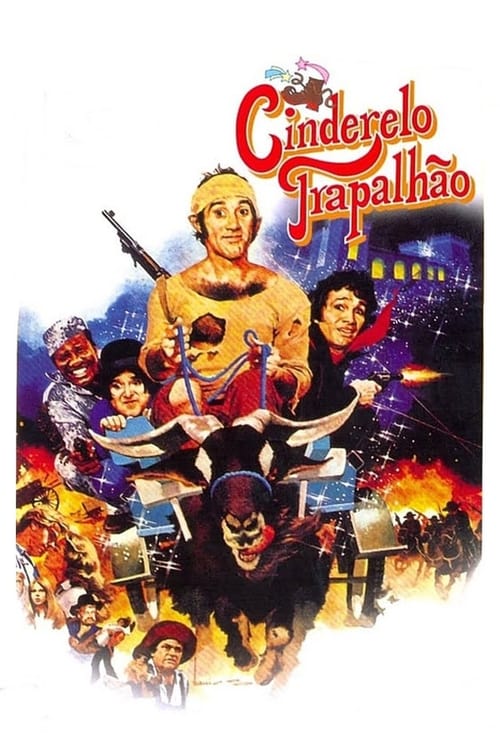
1979
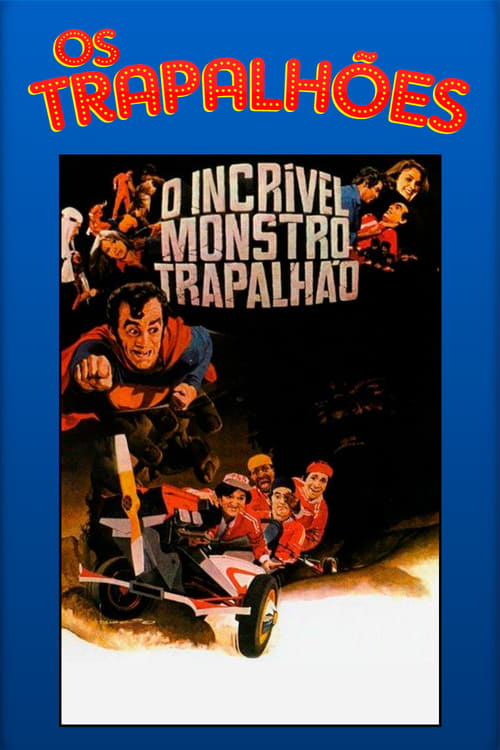
1980
No reviews yet. Be the first to share your thoughts on this movie!
Use the rating form above to leave a star rating and optional review.