Pluto at the Zoo
1942
No user ratings available yet
Diversity score: 1.0 out of 10
1943
NRDirector
Clyde Geronimi
Runtime
7 minutes
Average Rating
No ratings yetSynopsis
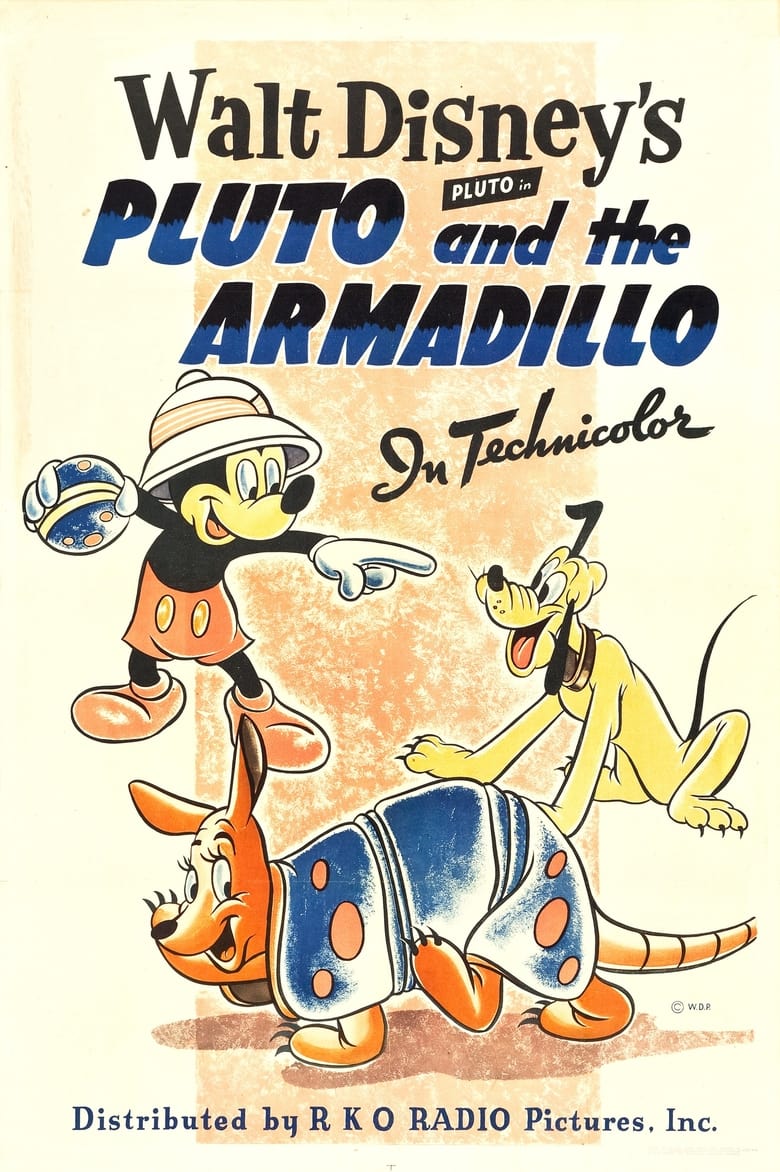
Mickey and Pluto make a short stopover on a South American flight. Mickey throws Pluto's ball into the jungle, and he chases it but it looks exactly the same as an armadillo that's rolled up into a ball. This, of course, greatly confuses Pluto for a while. But he eventually makes friends with the armadillo. He chases the critter into a cave right behind his ball, and rips the ball apart thinking it's the armadillo, which makes him very sad until the armadillo shows up again.
Overall Score
Minimal
Category Breakdown
LGBTQ+ Representation
The film focuses entirely on the instinctual interactions between a dog and a wild animal. There is no presence of non-cisnormative identities or same-sex intimacy.
Gender Representation
Protagonists are non-verbal animals, which prevents complex gender dynamics. The narrative lacks female characters and does not challenge traditional masculinity or social hierarchies.
Racial & Ethnic Diversity
The South American setting serves as a kinetic playground for the chase. It does not engage with local cultures, people, or specific ethnic identities.
Religious & Cultural Diversity
The story operates within a traditional, escapist framework. It avoids systemic critiques or ideological frameworks, focusing instead on basic biological impulses like play.
Disability Representation
There are no depictions of physical or neurodivergent characters. Slapstick mishaps are used as comedic tropes rather than explorations of disability.
Strengths
Areas for Improvement
AI Analysis
Pluto and the Armadillo is a classic example of mid-century character animation that prioritizes physical comedy over social complexity. The narrative relies on universalized animal behavior, which inherently limits the ability to address identity or systemic power dynamics. Because the characters are non-verbal animals, the film lacks the tools to explore intersectionality or social hierarchies. It functions as a vacuum of social identity, focusing on the kinetic energy of the chase rather than human social structures. The work remains a product of its era, adhering to a standard animation model that avoids political or cultural friction in favor of pure slapstick.
1942
1941
1940
1942
1940
1942
1939
1948
1941
1951
1932
1941
No reviews yet. Be the first to share your thoughts on this movie!
Use the rating form above to leave a star rating and optional review.