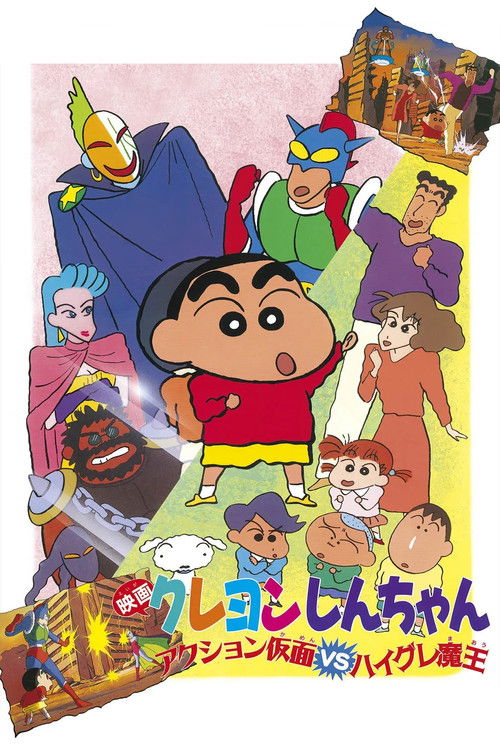
Crayon Shin-chan: Action Mask vs. Leotard Devil
1993
No user ratings available yet
Representation score: 7.1 out of 10

Representation Score
Good
1996
TV-YDirector
Craig McCracken
Runtime
7 minutes
Average Rating
No ratings yetNew Showbiz Analysis
The episode stands out by positioning young girls as the primary authorities and mentors, thereby subverting traditional gender roles. This inversion of power dynamics offers a fresh perspective on female leadership in animation. However, the narrative does not explicitly address LGBTQ+, racial, or ethnic diversity. Without specific character details, these elements do not significantly enhance the diversity profile. The story's strength lies in its thematic depth, particularly in its exploration of moral relativism and its nuanced portrayal of villains as systemic failures rather than purely evil.
Category Breakdown
There is no clear indication of LGBTQ+ characters or non-straight relationships in the story. The narrative does not provide any specific evidence of queer identities or challenges to the assumption that everyone is straight.
Three female protagonists play a significant role in driving the narrative and hold intellectual authority. They challenge traditional gender hierarchies by mentoring male-coded antagonists.
The story focuses on the interactions between the protagonists and the Amoeba Boys. There is no specific information about the ethnic backgrounds or diverse casting of the characters.
The plot explores moral relativism by breaking down the traditional good-versus-evil dichotomy. It portrays the Amoeba Boys as incompetent villains, challenging the binary morality.
The episode does not include any characters with visible or invisible disabilities, neurodivergence, or chronic health conditions.
Present on Screen
Limited or Absent
Official Synopsis
The Amoeba Boys want to be "bad guys" but they so don't know how. So they ask the Powerpuff Girls to show them.
1993
2002
1995
2008
2003
1997
2017
1993
No reviews yet. Be the first to share your thoughts on this movie!
Use the rating form above to leave a star rating and optional review.