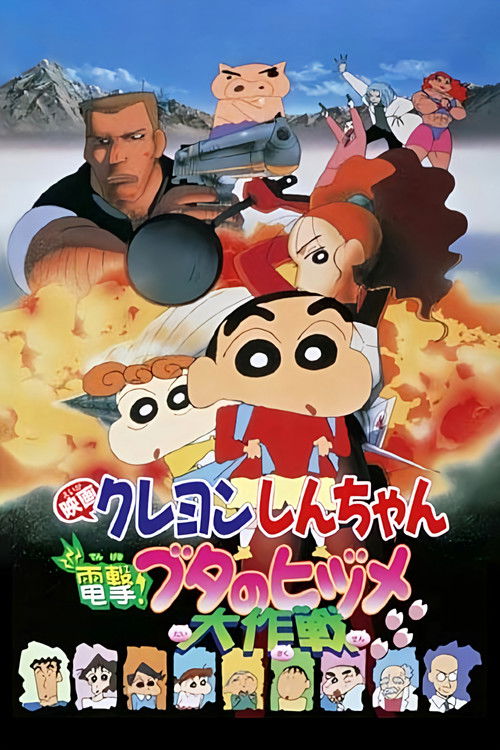
Crayon Shin-chan: Dengeki! Buta no Hizume Daisakusen
1998
No user ratings available yet
Representation score: 4.5 out of 10
Representation Score
Fair
1997
Director
Keiichi Hara
Runtime
99 minutes
Average Rating
No ratings yetNew Showbiz Analysis
The pursuit of the Balls of Darkness is a culturally specific comedy that prioritizes the subversion of social etiquette over identity-based representation. It finds its progressive edge by deconstructing traditional hierarchies and the sanctity of parental authority through Shinnosuke's anti-authoritarian behavior. However, the film remains limited by its homogeneity and traditional framework. The cast is localized to Japan, and the narrative lacks complexity around diverse human experiences. Ultimately, the film's strength lies in its comedic disruption of social norms rather than its engagement with systemic power structures or diverse human experiences.
Category Breakdown
The film adheres to a traditional framework that assumes everyone is straight or cisgender. It does not include explicit LGBTQ+ characters or narratives about non-cisgender identities.
Gender dynamics balance traditional household roles with comedic subversion. While Shinnosuke challenges parental authority, the film lacks significant female-led roles or exaggerated masculine leadership.
The story is set in a Japanese context with a homogeneous cast. It functions as a localized product without intentional blending of different racial or ethnic backgrounds.
The film uses absurdity to deconstruct social decorum and parental authority. It favors a chaotic, situational morality over rigid moral instruction or traditional social etiquette.
Characters function within a standard neurotypical and able-bodied framework. There are no prominent depictions of visible or invisible disabilities within the narrative.
Present on Screen
Limited or Absent
Official Synopsis
The Noharas get caught between two rival clans when Himawari swallows a pretty bead that turns out to be a mysterious ball with hidden powers.
1998

2004
1993
2003
2007

2001
1996

2000
No reviews yet. Be the first to share your thoughts on this movie!
Use the rating form above to leave a star rating and optional review.