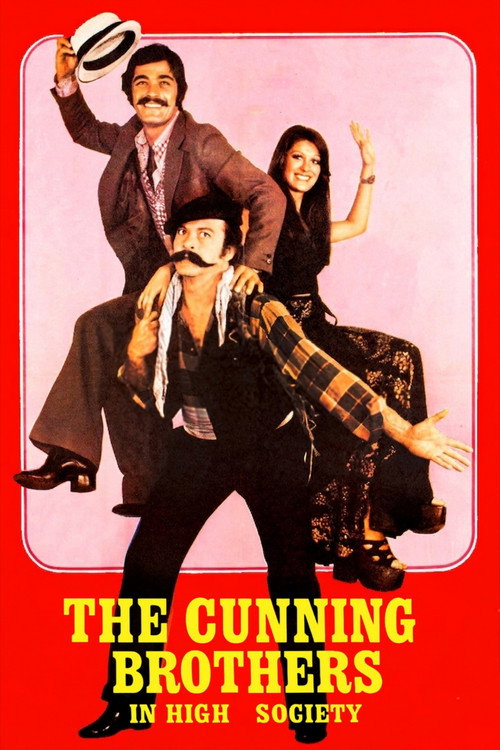
The Cunning Brothers in High Society
1973
No user ratings available yet
Diversity score: 4.8 out of 10

1968
Director
Ettore Scola
Runtime
130 minutes
Average Rating
No ratings yetSynopsis
A rich businessman is fed up with work, family, society, and goes with his accountant to Africa, in search of his brother-in-law who had vanished there in mysterious circumstances. They will find him alright - as a tribal chief, surrounded with lots of topless, shapely wives. They are going to return to civilisation, but will their friend come with them?
Overall Score
Fair
Category Breakdown
LGBTQ+ Representation
The narrative centers on traditional heteronormative structures and familial connections. There is no evidence of non-cisnormative identities or queer perspectives within the story.
Gender Representation
The film utilizes a traditional gendered framework, featuring a tribal chief with multiple wives. This setup risks leaning into exoticized female tropes common in 1960s adventure cinema.
Racial & Ethnic Diversity
While set in Africa, the story maintains a Eurocentric perspective. The tribal community serves primarily as a backdrop for a Western businessman's personal journey of self-discovery.
Religious & Cultural Diversity
The film offers a progressive critique of Western institutions. It portrays traditional capitalist and social structures as stifling, contrasting them with a more communal African lifestyle.
Disability Representation
There is no mention of characters possessing visible or invisible disabilities in the narrative.
Strengths
Areas for Improvement
AI Analysis
Ettore Scola’s film functions as a satirical critique of mid-century Western societal expectations. It prioritizes the protagonist's psychological alienation from capitalism and domesticity over standard adventure tropes. While the film challenges the hierarchy of Western social stability, it lacks meaningful representation of LGBTQ+ identities. The narrative architecture remains largely centered on a Westerner's existential crisis. The depiction of African characters appears limited, serving more as a setting for the protagonist's journey than as agents of their own story. This results in a Eurocentric lens.
1973

1989
1980

1980

1966

1970

1965

1974
1983

1961

1976
1973
No reviews yet. Be the first to share your thoughts on this movie!
Use the rating form above to leave a star rating and optional review.