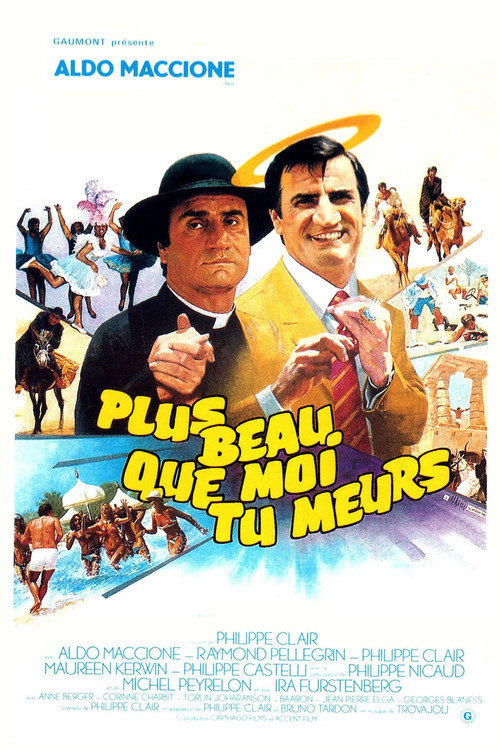
More Beautiful Than Me You Die
1982
No user ratings available yet
Representation score: 2.0 out of 10
Representation Score
Limited
1980
Director
Pierre Richard
Runtime
105 minutes
Average Rating
No ratings yetNew Showbiz Analysis
The film functions as a traditional farce, centered on mistaken identity and escapism. It leverages social hierarchies and disrupted roles to create comedic tension, primarily through male-driven pursuits. While the film touches on racial identity through the theme of mistaken social status, it remains rooted in conventional structures. The narrative emphasizes men's control over the story and the pursuit of romantic desires, but lacks substantial exploration of gender empowerment or diverse representation beyond its central racial premise.
Category Breakdown
The film deals with themes of infidelity and unstable relationships, particularly when an actor leaves his wife for a mistress. There is no clear indication of LGBTQ identities or non-straight relationships.
The storyline revolves around male-centric conflicts, such as professional competition and marital jealousy. Women play supporting roles, acting as catalysts for male actions, like the wife and the mistress, Valerie.
The film features Pierre Renard, a Black assistant who is mistakenly perceived as a white intellectual. This dynamic highlights issues of social perception and the fluidity of status based on appearance.
The story transitions from formal receptions to the Tunisian desert, emphasizing individualistic pursuits and personal desires over communal traditions or family stability.
There is no mention of characters dealing with physical, sensory, or neurological differences in the narrative.
Present on Screen
Limited or Absent
Official Synopsis
Pierre Renard is the blackboy of the writer George Vallier. At the time of a reception, the Italian actor Aldo Barazutti takes him for the writer and proposes to him to come to work with him in Tunisia with the development of a scenario. In fact Barazutti wants only to flee her wife to find her mistress Valerie. Misunderstandings when Vallier joined them. They must flee in the desert a jealous husband...
1982

1964
1989

1981
1973
1968

1975

1954
No reviews yet. Be the first to share your thoughts on this movie!
Use the rating form above to leave a star rating and optional review.