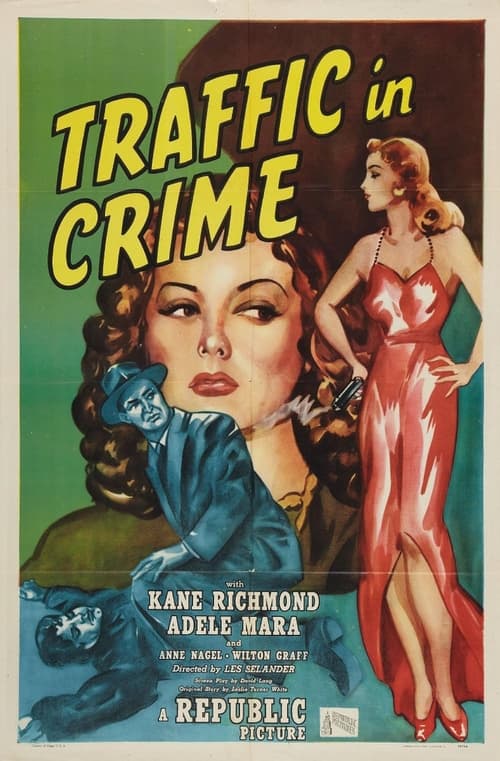
Traffic in Crime
1946
No user ratings available yet
Diversity score: 1.8 out of 10

1935
PassedDirector
Charles Barton
Runtime
67 minutes
Average Rating
No ratings yetSynopsis
A story of the Michigan State Police and the strong sense of loyalty and duty it instills in its men. It follows the career of a newly-inducted rookie, Ross Martin, who has joined the force at the urging of his sweetheart, Mary Adams. Martin soon distinguishes himself by his bravery in the apprehension of criminals. But when the leader of a gang of bank robbers falls into his hands and then escapes, because of carelessness on Martin's part, he is suspended from the force.
Overall Score
Minimal
Category Breakdown
LGBTQ+ Representation
The film adheres to 1930s romantic tropes, focusing on a traditional relationship between the hero and his sweetheart. No non-heteronormative identities are present in the narrative.
Gender Representation
Women function primarily as motivational catalysts for male action. Mary Adams serves as the impetus for the protagonist's career rather than acting as an autonomous character.
Racial & Ethnic Diversity
The story centers on law enforcement and bank robbers within a likely homogeneous cast. There is no evidence of racial intersectionality or diverse casting.
Religious & Cultural Diversity
The plot reinforces Western institutional values like loyalty and duty. It promotes a narrative of moral rectitude and adherence to state law enforcement structures.
Disability Representation
The narrative contains no mention of characters with physical or neurodivergent disabilities. No information is available to assess this category.
Strengths
Areas for Improvement
AI Analysis
Car 99 is a conventional 1935 crime drama that prioritizes institutional loyalty and traditional social hierarchies. The narrative structure follows a standard hero's journey, focusing on a rookie officer's rise, fall, and redemption within the Michigan State Police. Representation is minimal, reflecting the era's standard cinematic norms. The film relies on established gender roles and lacks any visible diversity in terms of race or sexual orientation, operating strictly within the period's mainstream studio expectations. Ultimately, the film serves as a reinforcement of mid-1930s values, emphasizing duty and domestic motivation rather than challenging social or cultural boundaries.
1946
1938
1919
1937
1935
1933
1931
1935
1935
1929
1940
1933
No reviews yet. Be the first to share your thoughts on this movie!
Use the rating form above to leave a star rating and optional review.