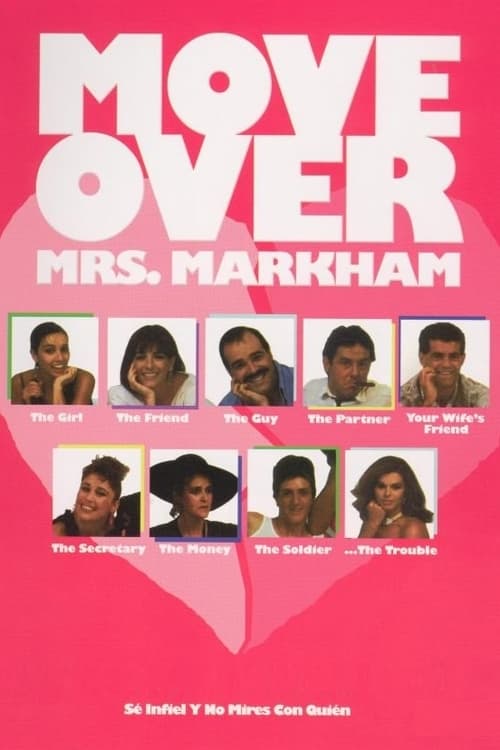
Move Over, Mrs. Markham
1985
No user ratings available yet
Representation score: 2.9 out of 10

Representation Score
Fair
2006
Director
Moacyr Góes
Runtime
92 minutes
Average Rating
No ratings yetNew Showbiz Analysis
Cheating in Chains dismantles the idea of stable social and marital structures. It shifts away from idealized family portraits to depict a chaotic environment within a middle-class context. While the film does not explicitly focus on identity-based representation like LGBTQ+ characters or visible disabilities, it adopts a progressive stance through its critique of traditional family units. By highlighting subjective truth and the collapse of moral hierarchies, the narrative challenges the perceived stability of middle-class social structures.
Category Breakdown
The film centers on traditional marriage and romance, without any representation of LGBTQ+ identities or non-cisgender narratives.
The narrative challenges traditional gender roles by presenting characters with moral complexity and emotional instability, rather than idealized virtues.
The story emphasizes class-based social stratification through the character of Olímpia, a domestic worker. Specific racial casting details are not provided, but class dynamics are central to the plot.
The film critiques traditional domestic institutions and singular morality, framing love as a chaotic and situational game influenced by systemic dysfunction.
There is no information about the portrayal of physical or neurodivergent disabilities in this work.
Present on Screen
Limited or Absent
Official Synopsis
Olímpia loves her bosses, Inês and Eduardo. Eduardo loves Inês, his wife, who loves Eduardo, her husband. Inês is a friend of Lígia´s, who loves her husband Cristiano. Cristiano loves Lígia, his wife. Vera loves Cláudio, her husband, who doesnt love Vera. Inês thinks that Eduardo is having an affair with Salete, Cristiano thinks that Lígia is having an affair with Ricco, Vera thinks that Cláudio has an affair with Inês and Eduardo thinks that Inês has an affair with Cláudio. The action takes place in a middle class condo where Olímpia, a clumsy maid, carries out the most unbelievable confusions, making everybody believes that love is a game in which one always cheats.
1985
1976

2019

1955
2002

2019
1981

2007
No reviews yet. Be the first to share your thoughts on this movie!
Use the rating form above to leave a star rating and optional review.