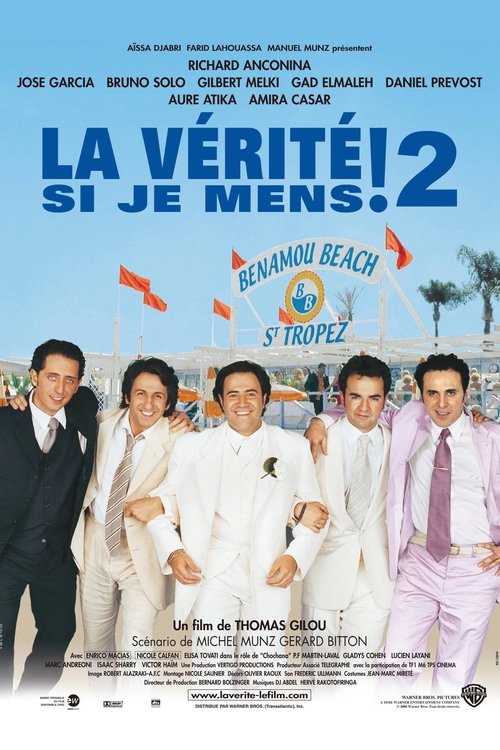
Would I Lie to You? 2
2001
No user ratings available yet
Representation score: 3.6 out of 10

Representation Score
Good
2019
Director
Gérard Bitton, Michel Munz
Runtime
100 minutes
Average Rating
No ratings yetNew Showbiz Analysis
The film places queer identities at the center of its narrative, exploring them through authentic social and romantic pursuits in 1980s Paris. While it challenges traditional masculine stereotypes through comedic failure, it remains focused on the male experience. Additionally, the film reflects a cosmopolitan environment but lacks actively leading characters of color, leading to a more homogeneous demographic representation.
Category Breakdown
The film focuses on the romantic and social lives of four young men in 1980s Paris. It normalizes queer identities by making them central to the narrative instead of using them for comedic relief.
The story challenges traditional masculine stereotypes by showing male characters struggling with both business and romance. Despite offering a nuanced view of masculinity, the focus remains on the male experience.
The setting highlights the cosmopolitan nature of Paris, yet the cast appears largely homogeneous. The film reflects the era’s social landscape without featuring actively leading characters of color to drive the plot.
The narrative prioritizes personal freedom and situational ethics over strict moral frameworks. It uses the protagonists' unconventional pursuits to critique the social constraints of the 1980s.
There is no significant evidence regarding the portrayal of visible or invisible disabilities within the film's characters.
Present on Screen
Limited or Absent
Official Synopsis
In 1980s Paris - Patrick, Dov, Yvan and Serge are young men seeking success in love and business... with varying success.
2001
1997

2002
1994

2020
1974
1980
1997
No reviews yet. Be the first to share your thoughts on this movie!
Use the rating form above to leave a star rating and optional review.