
If All Goes Well We Are Ruined
1983
No user ratings available yet
Representation score: 2.3 out of 10
Representation Score
Limited
1983
Director
Sergio Martino
Runtime
113 minutes
Average Rating
No ratings yetNew Showbiz Analysis
Sergio Martino’s comedy is rooted in its specific cultural and temporal context, prioritizing local folklore over social disruption. The film adheres to traditional frameworks, focusing on character-driven humor rather than addressing multi-layered complexities. The narrative lacks intentional progressive representation, functioning as a piece of period-specific domestic entertainment that upholds established social hierarchies without challenging them.
Category Breakdown
The film follows traditional 1980s comedic structures and does not include non-binary gender identities or narratives that question heterosexuality. Instead, it focuses on slapstick humor and folk superstitions.
The main character's neuroses drive the plot, and the film relies on standard comedic archetypes of the time without challenging traditional gender roles.
Set in Rome, the cast reflects the demographic uniformity of 1980s Italian domestic comedies. It does not feature a multicultural cast or explore ethnic diversity.
The story delves into local folklore and the concept of the 'evil eye.' While superstition is treated comically, the film avoids deeper critiques of religion or Western institutions.
No characters with physical or neurodivergent disabilities are shown who play a significant role in driving the story. The protagonist's obsessions serve comedic purposes rather than exploring mental health issues.
Present on Screen
Limited or Absent
Official Synopsis
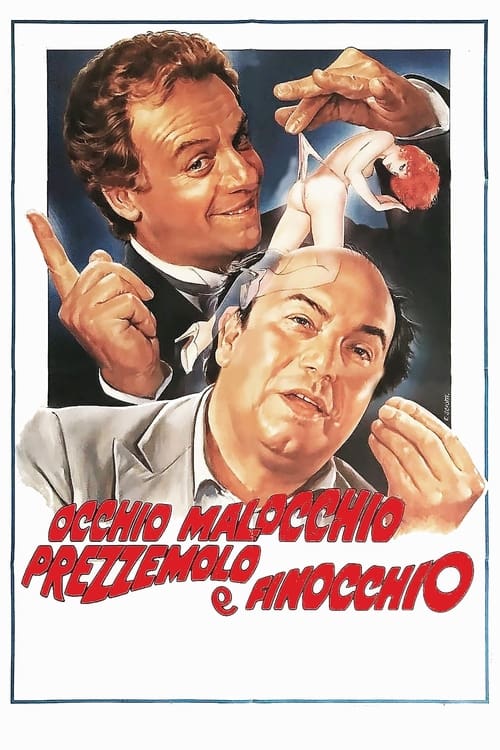
The film is divided into two episodes, The Hair of Disgrace and The Magician, both focusing on the theme of the occult and beliefs. The title translates as "Eye, Evil Eye, Parsley and Fennel".
1983

1963
1985

1965
1975
1963

1982

2016
No reviews yet. Be the first to share your thoughts on this movie!
Use the rating form above to leave a star rating and optional review.