
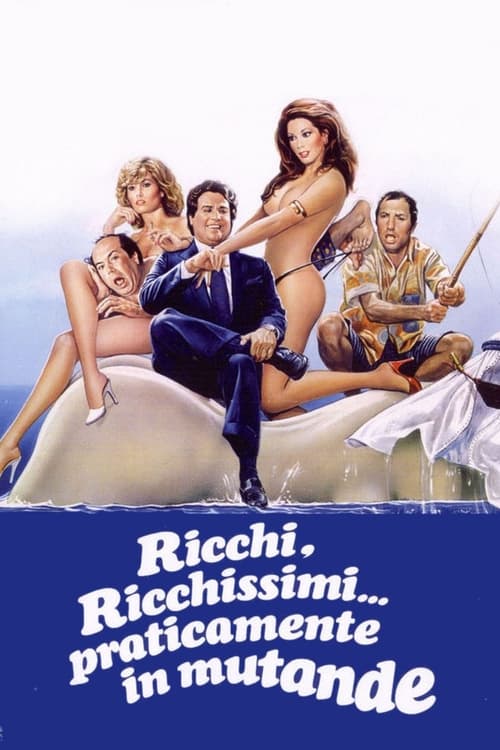
If All Goes Well We Are Ruined
1983
No user ratings available yet
Representation score: 2.3 out of 10
Representation Score
Limited
1982
Director
Sergio Martino
Runtime
115 minutes
Average Rating
No ratings yetNew Showbiz Analysis
Don't Play with Tigers operates as a traditional genre piece of its era. The narrative structure focuses on situational comedy and the misfortune of specific characters during a legal proceeding rather than social deconstruction. The film lacks intentionality regarding the disruption of established social hierarchies. It functions as a standard example of period-specific storytelling that does not prioritize underrepresented identities. Ultimately, the production reflects the demographic and social norms of 1980s Italian cinema, favoring a homogeneous cast and conventional character dynamics.
Category Breakdown
The film does not include any representation of LGBTQ+ characters or narratives that critique the assumption that everyone is straight or cisgender. It lacks representation of non-assuming gender matches what was assigned at birth identities within its comedic framework.
The narrative focuses on unlucky characters in a trial setting. It appears to rely on conventional gender roles typical of early 1980s European comedies, where women's ability to drive the story remains secondary.
As a localized Italian production, the film centers on a homogeneous demographic. There is no evidence of a diverse or multi-ethnic cast.
The comedy explores social status and misfortune through a character-driven lens. It lacks a systemic critique of traditional institutions like religion or the family unit.
There is no verifiable evidence regarding the inclusion of characters with visible or invisible disabilities.
Present on Screen
Limited or Absent
Official Synopsis
A stories of three really unlucky characters are discovered during the trial.
1983

1980

1983
1975

1977

1980
2008

1985
No reviews yet. Be the first to share your thoughts on this movie!
Use the rating form above to leave a star rating and optional review.