Seventeen Years
1999
No user ratings available yet
Representation score: 6.6 out of 10
Representation Score
Good
2010
Director
Liu Jie
Runtime
100 minutes
Average Rating
No ratings yetNew Showbiz Analysis
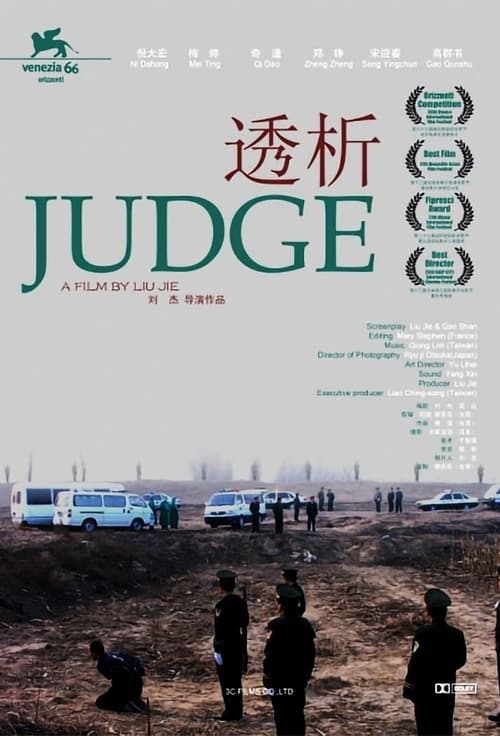
Judge is a social realist drama that prioritizes systemic critique over identity-based representation. The narrative explores the friction between individual influence and rigid institutional power within a specific regional Chinese setting. The film’s strength lies in its deconstruction of judicial stability and its portrayal of the working class. It highlights how personal grief can intersect with systemic corruption to exacerbate the plight of the impoverished. However, the film follows a traditional patriarchal structure with limited female roles. The lack of diverse identity markers, such as LGBTQ+ characters, keeps the representation score at a baseline level.
Category Breakdown
The film does not explicitly mention LGBTQ+ characters or non-straight relationships. The narrative focuses on the legal and familial structures of a 1990s northern Chinese city.
The story centers on male figures, specifically Judge Tian and the defendant Qiuwu. Female presence is limited to the memory of a deceased daughter who serves as an emotional catalyst.
The cast is culturally homogeneous, reflecting a specific regional Chinese context. It avoids Western-normative lenses by centering a localized, non-Western social and legal struggle.
The film offers a sharp critique of systemic institutional reliability. It portrays the judiciary as a site of personal bias and explores the commodification of the human body.
Representation is framed through terminal illness and the physical toll of organ donation. It avoids common disability clichés, focusing instead on systemic vulnerability and the consequences of poverty.
Present on Screen
Limited or Absent
Official Synopsis
In a small northern Chinese city in 1997, Judge Tian privately struggles with the loss of his daughter, killed by a stolen car in a hit-and-run accident. On the bench he encounters Qiuwu, a mechanic accused of stealing two cars. Perhaps influenced by his emotional state, the outwardly impassive judge imposes an almost-obsolete criminal law on Qiuwu that sentences him to death for his crime. Desperate to mitigate his sentence, Qiuwu agrees to donate his kidney to a rich businessman dying of a terminal illness, hoping at the very least that his impoverished family may profit from his demise.
1999

1989
2008

2013

2014
2008

2004

2003
No reviews yet. Be the first to share your thoughts on this movie!
Use the rating form above to leave a star rating and optional review.