Voice of Silence
2020
No user ratings available yet
Representation score: 6.2 out of 10
Representation Score
Fair
2008
Director
Kim Young-jun
Runtime
104 minutes
Average Rating
No ratings yetNew Showbiz Analysis
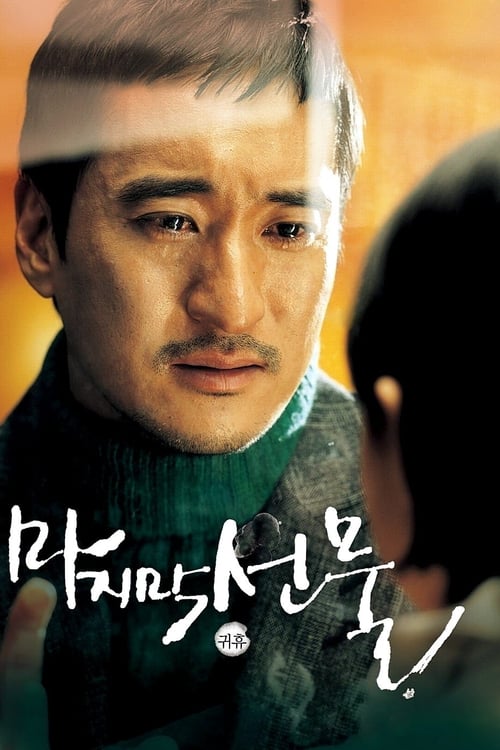
His Last Gift is a character-driven melodrama that prioritizes personal redemption and biological legacy over social critique. The narrative relies on traditional emotional pillars, such as the bond between a father and his daughter, to drive its high-stakes plot. While the film explores the realities of a rare genetic disorder, it operates within conventional dramatic formulas. The focus remains on the personal moral journey of a criminal seeking atonement through medical necessity. Ultimately, the film lacks depth in exploring diverse identities or challenging social hierarchies, functioning instead as a culturally specific drama centered on family and duty.
Category Breakdown
The story focuses on straight relationships, particularly the bond between a father and his daughter. There is no representation of LGBTQ+ identities or critiques of traditional social structures.
Female characters play a key role in driving the plot emotionally, but their influence is largely tied to their biological roles. Male characters dominate the narrative and decision-making processes.
As a South Korean production, the film highlights cultural specificity. However, it does not blend different racial backgrounds or challenge ethnic hierarchies.
The film emphasizes personal ethics, atonement, and family obligations. It follows a traditional moral arc without critiquing broader social or political institutions.
Wilson's disease serves as the central narrative engine for the protagonist's transformation. The depiction of chronic illness provides the main motivation for the film's high-stakes drama.
Present on Screen
Limited or Absent
Official Synopsis
Tae-ju, a murderer serving a life sentence in prison, is given a temporary release to save the life of a seriously ill young girl, Se-hee, who suffers from Wilson's disease and desperately needs a liver transplant. Se-hee is the daughter of Yeong-woo, and old friend of Tae-ju's who is now a police officer. Upon discovering that Se-hee's now deceased mother was his ex-girlfriend, Tae-ju realises that he is in fact her biological father, and does everything he can to try and save her life.
2020

2002
2017

2007
1996

2011
1993
2007
No reviews yet. Be the first to share your thoughts on this movie!
Use the rating form above to leave a star rating and optional review.