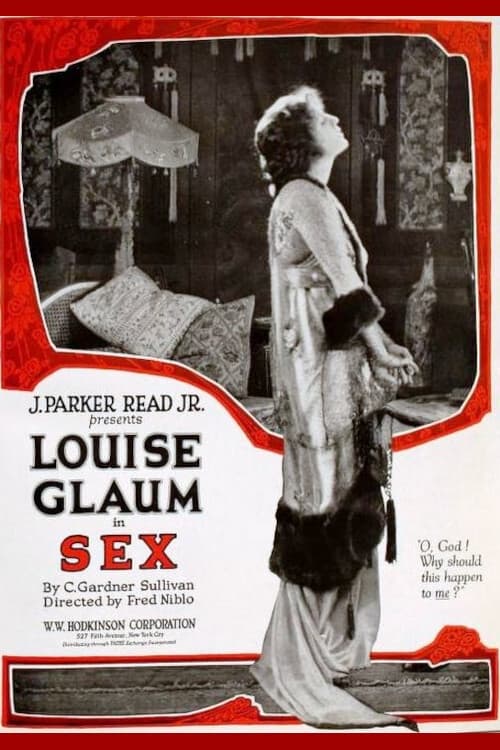
Sex
1920
No user ratings available yet
Representation score: 1.0 out of 10

Representation Score
Minimal
1923
PassedDirector
Edward LeSaint
Runtime
65 minutes
Average Rating
No ratings yetNew Showbiz Analysis
Temptation (1923) adheres to the conservative storytelling norms of the silent era. The narrative is driven by a male stockbroker's quest to prove a theory about women and wealth, reinforcing traditional social and gender roles. Women are positioned as subjects to be judged rather than independent actors. The film lacks multi-layered depth, focusing on a singular male perspective and the socioeconomic context of the time.
Category Breakdown
The film does not include any characters with non-straight identities. The narrative focuses solely on heterosexual relationships.
The story revolves around a male protagonist who drives the plot. Women are portrayed primarily as objects of observation rather than as independent characters.
There is no indication of diverse ethnic backgrounds. The setting reflects the dominant socioeconomic demographics of 1923 New York.
The plot explores moral questions within a typical Western social framework. It adheres to the capitalist structures prevalent in the early 20th century.
There is no mention of characters with physical, sensory, or neurodivergent disabilities.
Present on Screen
Limited or Absent
Official Synopsis
A wealthy New York City stockbroker who sets out to prove that women are corrupted by wealth.
1920

1930

1915
1922
1918

1920

1932

1929
No reviews yet. Be the first to share your thoughts on this movie!
Use the rating form above to leave a star rating and optional review.