You are here:

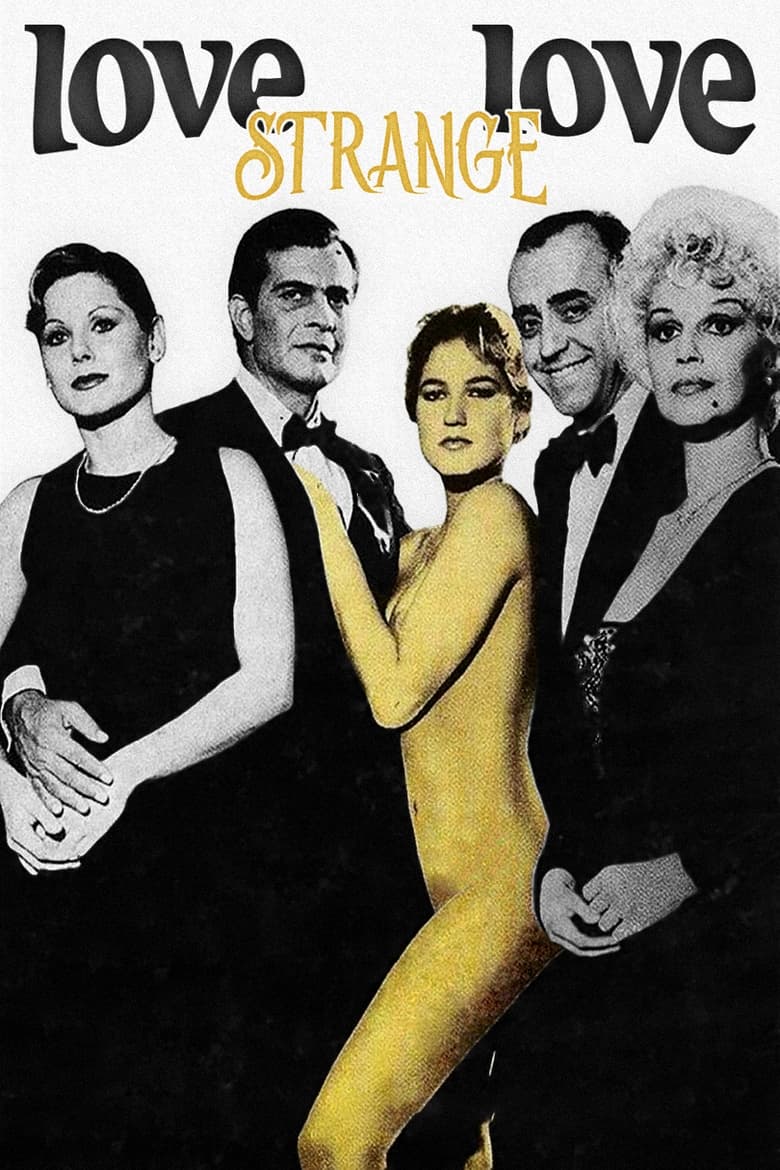
Love Strange Love

Love Strange Love

Representation Score

6.3/10

Good

1982

Director

Walter Hugo Khouri

Runtime

123 minutes

Average Rating

No ratings yet

New Showbiz Analysis

Walter Hugo Khouri’s film offers a nuanced exploration of identity and societal influences. It transcends typical historical dramas by focusing on the internal, subjective experiences of its protagonist. By centering underrepresented spaces and the fluid nature of human sexuality, the film provides a significant role in driving the story to the character's development. However, it remains limited by the power dynamics of its political setting and the absence of explicit racial character detail. The film excels in psychological depth and moral relativism but could benefit from more diverse representation.

Watch this, not that →

Category Breakdown

Does Love Strange Love have LGBTQ+ representation?

Excellent

The film focuses on a journey of sexual self-discovery. It portrays the protagonist's awakening within a bordello, emphasizing sexuality as a transformative, personal experience.

How does Love Strange Love portray gender?

Good

The narrative challenges traditional gender roles by centering a woman who exists outside respectable society. However, her ability to drive the story is tied to her relationship with a powerful politician.

How racially and ethnically diverse is Love Strange Love?

Fair

Set in 1937 Brazil, the film highlights social stratification and explores class and power dynamics intertwined with the country's complex racial landscape.

How does Love Strange Love represent religion and culture?

Good

The story delves into moral gray areas rather than adhering to traditional religious morality. It critiques the stability of institutions by placing the plot during a period of political upheaval.

Does Love Strange Love include disability representation?

Minimal

There is no evidence regarding the portrayal of physical or neurodivergent disabilities in this work.

Present on Screen

  • The narrative provides a significant role in driving the story to the protagonist through a deep study of sexual identity formation.
  • It challenges traditional female clichés by centering a woman who operates outside conventional domestic hierarchies.
  • The film effectively uses moral relativism to critique the sanctity of traditional social and political orders.

Limited or Absent

  • The depiction of women's ability to drive the story is complicated by its reliance on powerful male political figures.
  • Specific character-level racial diversity is not explicitly detailed within the narrative overview.
  • The film lacks any visible representation of physical or neurodivergent disabilities.

Official Synopsis

A man remembers forty-eight crucial hours in his life when, as a child, he visited his mother, the favorite woman of an important politician, in a bordello owned by him, right before some important political changes in 1937 Brazil. In those hours, he discovers his own sexuality.

How are these scores produced? →

Where to Watch

Rate this Movie

No rating selected
Use arrow keys to select a rating from 1 to 5 stars
Optional text review, maximum 2000 characters
Tip: Wrap spoilers with ||double pipes|| to hide them
0/2000 characters
You must be signed in to submit a rating

Reviews

No reviews yet. Be the first to share your thoughts on this movie!

Use the rating form above to leave a star rating and optional review.