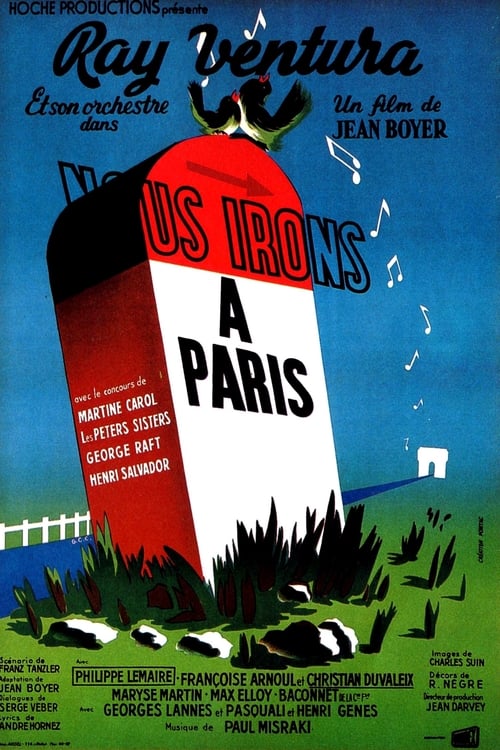
We Will All Go to Paris
1950
No user ratings available yet
Representation score: 2.9 out of 10

Representation Score
Minimal
1950
Director
Pierre Montazel
Runtime
96 minutes
Average Rating
No ratings yetNew Showbiz Analysis
This musical comedy follows the conventional clichés of 1950s French cinema, focusing on the celebrity culture surrounding a popular singer's marriage announcement. The narrative structure prioritizes mainstream romantic milestones and musical entertainment over social commentary. Since the story centers on traditional celebrity excitement, it lacks the complexity needed to disrupt established social norms. The film serves as standard commercial entertainment of its period, offering little in the way of diverse representation.
Category Breakdown
The film does not include any evidence of non-straight relationships. The focus on a future marriage aligns with traditional romantic structures of the time.
While a star singer holds significant influence, there is no evidence of challenging traditional gender roles. The film likely upholds mid-century gender norms.
There is no indication of a non-white or diverse cast. The production follows standard European casting practices of the 1950s.
The story centers on celebrity and romantic excitement, reinforcing traditional social structures. It does not critique Western institutions or promote alternative themes.
No information is available regarding the inclusion or portrayal of characters with visible or invisible disabilities.
Present on Screen
Limited or Absent
Official Synopsis
The announcement of the future marriage of Franck Reno, the star singer, causes considerable excitement around the world.
1950
1963
1957
1957
1933
1949
1953
1954
No reviews yet. Be the first to share your thoughts on this movie!
Use the rating form above to leave a star rating and optional review.