Find another title
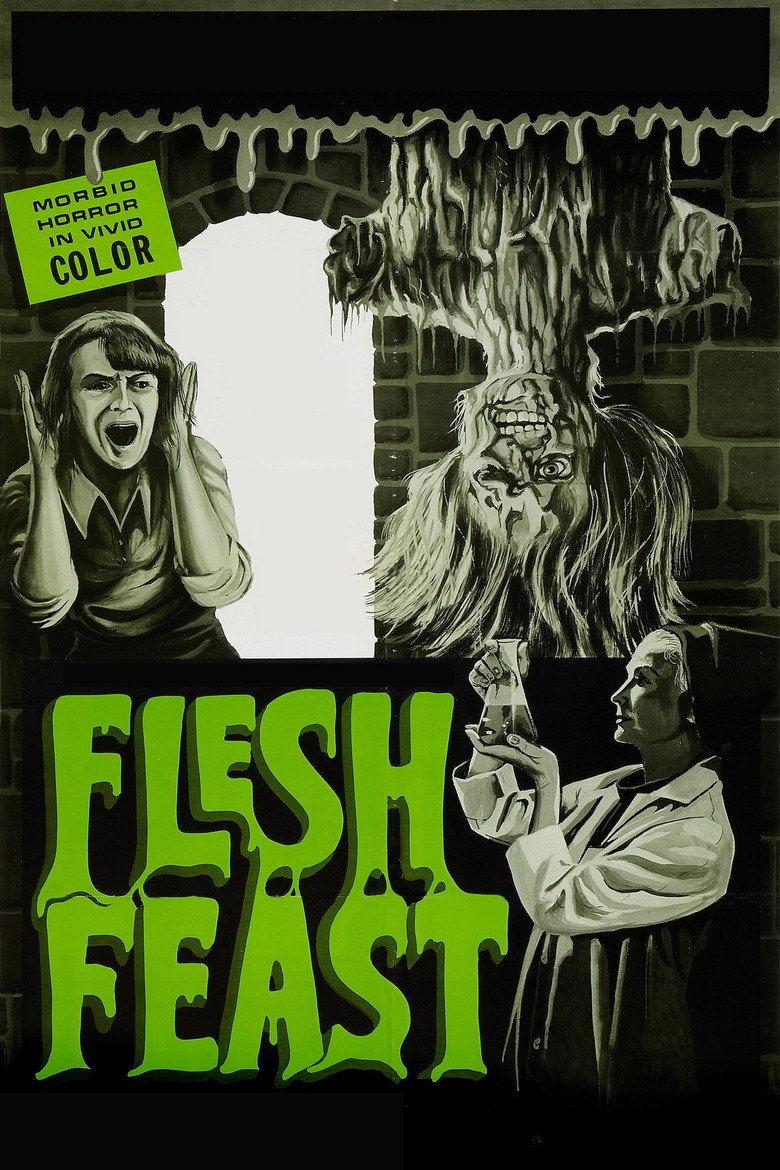
Flesh Feast
1970
RDirector
Brad F. Grinter
Runtime
72 minutes
Average Rating
No ratings yetSynopsis
A doctor in Florida conducts shady experiments involving maggots and stolen body parts for mysterious South American benefactors. The suspicion grows amongst the staff as to what, or possibly who, her diabolical research is going towards.
Where to Watch
Diversity & Representation
Overall Score
Limited
Category Breakdown
LGBTQ+ Representation
The film contains no LGBTQ+ characters or explorations of non-heteronormative identities. It adheres to standard 1970s exploitation archetypes focused on biological horror.
Gender Representation
Female characters are central, including the doctor conducting experiments, but they largely occupy tropes of the mad scientist or victim. The film reinforces traditional gender hierarchies and power distributions.
Racial & Ethnic Diversity
The cast lacks significant racial or ethnic diversity, maintaining a demographic profile typical of Western exploitation films. There is no evidence of intentional race-bending or diverse casting.
Religious & Cultural Diversity
The narrative focuses on a breakdown of social norms and medical ethics to drive horror. It lacks a structured critique of Western institutions or sophisticated moral relativism.
Disability Representation
Characters with disabilities are not portrayed with agency. Biological transformations serve as visceral horror devices rather than nuanced explorations of physical or neurodivergent experiences.
Strengths
- Features a female protagonist in a central, authoritative role as a doctor.
Areas for Improvement
- Lacks representation of LGBTQ+ identities.
- Fails to include diverse racial or ethnic casting.
- Does not provide nuanced portrayals of disability or neurodivergence.
- Relies on traditional gender tropes rather than subverting hierarchies.
AI Analysis
Flesh Feast is a product of its era, prioritizing visceral shock and genre-standard tropes over intersectional representation. While it features a female lead in a position of scientific authority, she remains tethered to established horror archetypes rather than subverting gender norms. The film lacks meaningful diversity across racial, cultural, and LGBTQ+ lines, presenting a demographic profile consistent with low-budget 1970s exploitation cinema. Its focus remains strictly on biological horror and survival. Ultimately, the film functions as a standard genre piece that uses medical transgression as a plot device rather than a vehicle for social or systemic critique.
Rate this Movie
Reviews
No reviews yet. Be the first to share your thoughts on this movie!
Use the rating form above to leave a star rating and optional review.