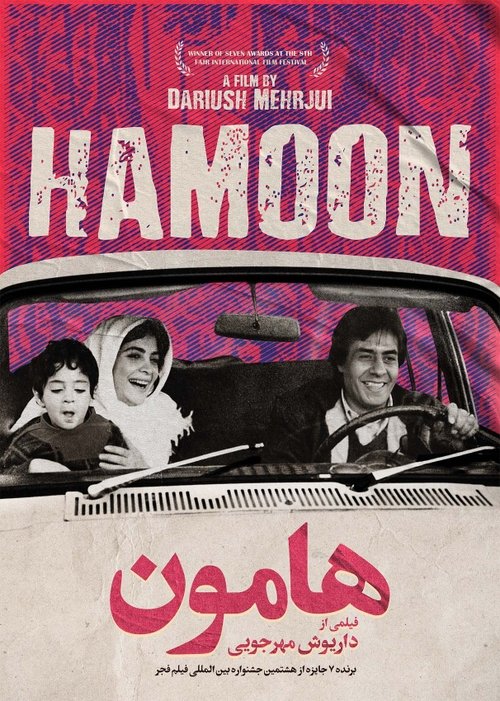
Hamoon
1990
No user ratings available yet
Representation score: 4.2 out of 10

Representation Score
Excellent
1989
Director
Saeed Ebrahimifar
Runtime
100 minutes
Average Rating
No ratings yetNew Showbiz Analysis
Saeed Ebrahimifar’s film provides a contemplative, non-linear look at identity that challenges typical commercial film styles. By focusing on the relationship between a photographer and an elderly man, it breaks away from traditional linear storytelling in favor of fragmented, personal memories. The film stands out by offering a non-Western cultural context, moving away from Anglo-Saxon filmmaking traditions. It handles physical decline with respect and existential depth, avoiding ridicule. However, the film is limited in its direct representation of diverse demographics. The story mainly revolves around interactions between two male figures, limiting broader social and identity-related diversity.
Category Breakdown
The film doesn't explicitly show LGBTQ+ identities or relationships that go beyond the assumption that everyone is straight. However, it focuses on internal thoughts and feelings without showing specific actions or roles for LGBTQ+ characters.
The movie focuses on existential questions and personal vulnerabilities rather than typical male power dynamics. It avoids reinforcing the usual strong, dominant male character types.
As an Iranian film, it centers on a non-Western viewpoint. It explores themes of mortality from a culturally specific angle, which isn't part of the mainstream Western cinema style.
The film uses cultural complexity through personal morality and memories. It employs a secular, existentialist approach instead of traditional religious or institutional morals.
A medical emergency is the main plot point, highlighting physical weakness. The film treats the elderly man's condition as a natural part of life rather than a spectacle.
Present on Screen
Limited or Absent
Official Synopsis
Hunting for interesting elements for a play, a photographer meets an old man, who has just had a heart attack He tries to save the man's life. In an effort to determine the old man's identity, he is confronted with the old man nostalgic memories.
1990
1997
2000

1995
1998
1999
2002

1998
No reviews yet. Be the first to share your thoughts on this movie!
Use the rating form above to leave a star rating and optional review.