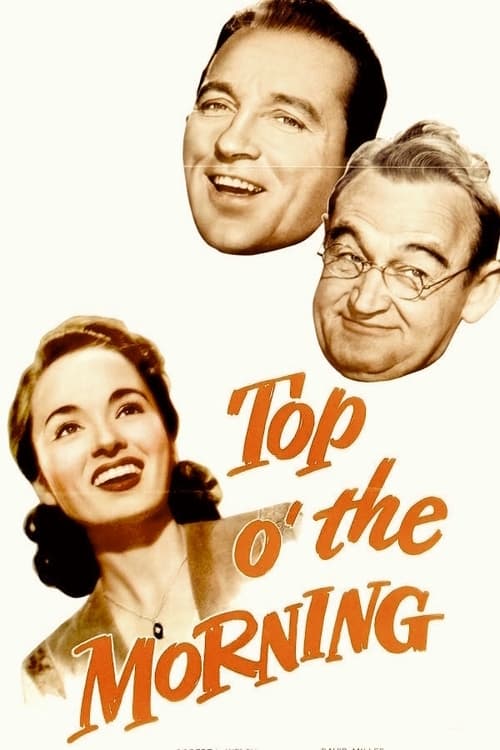
Top o' the Morning
1949
No user ratings available yet
Diversity score: 3.1 out of 10

1928
NRDirector
John Ford
Runtime
68 minutes
Average Rating
No ratings yetSynopsis
In this early comedy from John Ford, Riley is a New York Irish cop sent to Germany to track down a young man who stole money from a local bakery.
Overall Score
Limited
Category Breakdown
LGBTQ+ Representation
The film lacks any indication of LGBTQ+ characters or non-cisnormative identities. It follows a conventional comedic structure typical of the late 1920s.
Gender Representation
The story centers on a male protagonist performing a traditionally masculine role as a policeman. This reinforces conventional gender hierarchies rather than disrupting them.
Racial & Ethnic Diversity
The film features an Irish protagonist in a German setting, providing some ethnic movement. However, it lacks a multi-ethnic cast to drive higher diversity.
Religious & Cultural Diversity
The narrative uses the friction between Irish and German national identities as a comedic engine. It reinforces nationalistic distinctions rather than deconstructing them.
Disability Representation
There is no mention of characters with visible or invisible disabilities. No assessment can be made regarding neurodivergence or physical disability.
Strengths
Areas for Improvement
AI Analysis
Riley the Cop is a product of its era, utilizing ethnic identity as a comedic device without challenging systemic structures. While it moves beyond a purely Anglo-Saxon domestic setting by featuring an Irish character in Germany, it remains rooted in traditional archetypes. The film's focus on a male law enforcement officer reinforces standard masculine agency. It lacks the intersectional complexity or progressive subversion necessary to move beyond the social norms of 1928. Ultimately, the work functions as a conventional character study that relies on nationalistic friction rather than diverse or inclusive representation.
1949
1937
1931
1919
2008
1959

1935
1944
1938
1929
1936
1933
No reviews yet. Be the first to share your thoughts on this movie!
Use the rating form above to leave a star rating and optional review.