Toe Tag Parole: To Live and Die on Yard A
2015
No user ratings available yet
Representation score: 8.8 out of 10
Representation Score
Good
1991
Director
Alan Raymond
Runtime
60 minutes
Average Rating
No ratings yetNew Showbiz Analysis
Doing Time: Life Inside the Big House offers an authentic look at the racial demographics of the carceral system, providing actively leading representation for Black and Hispanic inmates. However, the film's setting limits its scope in terms of gender and LGBTQ+ representation, reinforcing traditional masculine hierarchies. Ultimately, the documentary stands out as a critique of state-run justice systems, focusing on the lived experiences of individuals caught in a cycle of systemic failure.
Category Breakdown
The film focuses on a hyper-masculine prison environment with no central LGBTQ+ narratives or non-assuming gender matches what was assigned at birth identities.
The narrative is dominated by a strictly male environment, depicting traditional masculine hierarchies without giving women a significant role or challenging gendered power dynamics.
The documentary highlights Black and Hispanic inmates, who are central to the film's sociological investigation rather than serving as background elements.
The film documents a system where rehabilitation is abandoned, highlighting how survivalist hierarchies emerge in response to institutional oppression.
The film touches on mental health through the lens of survival but does not provide extensive coverage of neurodivergence or physical disabilities.
Present on Screen
Limited or Absent
Official Synopsis
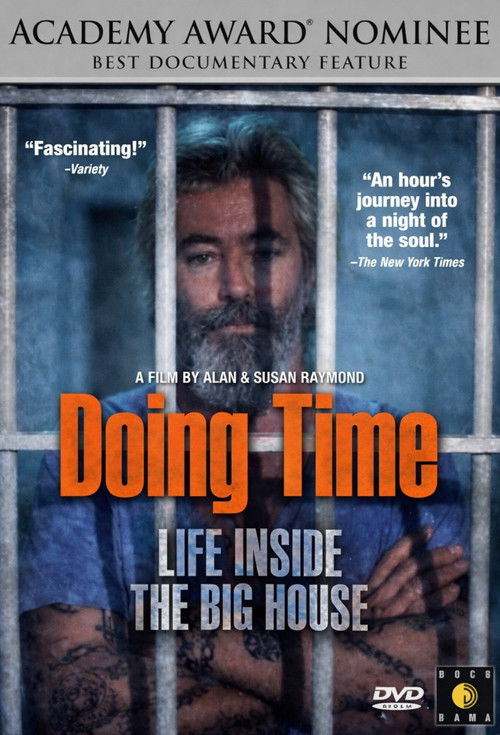
Academy Award®-nominated DOING TIME: LIFE INSIDE THE BIG HOUSE takes a hard-edged look at life inside the walls of Lewisburg, a maximum security federal penitentiary where the notion of rehabilitation and parole have all but been abandoned. After gaining unprecedented permission from the Justice Department, Emmy® Award-winner Alan Raymond spent five weeks inside Lewisburg. With access to the entire prison, the Raymonds captured the stories of corrections officers as well as the inmates, including drug lords, "lifers" with no possibility of parole, and prisoners convicted of leading prison riots. Detailing a world where prisoners carry "shanks" and officers respond to violence in full riot gear, this candid documentary reveals what life inside "the big house" is really like. A rare, unprecedented look at the prison subculture, DOING TIME: LIFE INSIDE THE BIG HOUSE will challenge the way you look at incarceration in America.
2015

1967
1998
2012

2009

2012
1994
2015
No reviews yet. Be the first to share your thoughts on this movie!
Use the rating form above to leave a star rating and optional review.