
Sooner or Later
2003
No user ratings available yet
Representation score: 8.6 out of 10
Representation Score
Fair
2013
PGRuntime
64 minutes
Average Rating
No ratings yetNew Showbiz Analysis
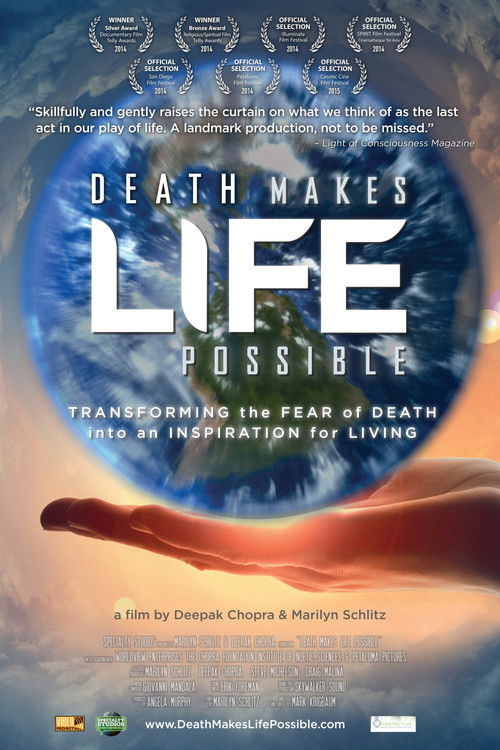
Death Makes Life Possible functions as an academic and observational study rather than a character-driven narrative. Because the film is driven by anthropological inquiry, its representation is tied to its ethnographic scope rather than traditional storylines. The film succeeds in centering a female academic as the primary investigator and narrator. However, the lack of specific data regarding identity-driven narratives limits its overall diversity score. While the documentary adopts a secularist perspective that challenges certain religious frameworks, it remains neutral on many specific demographic markers, such as race and disability.
Category Breakdown
The film focuses on the universal human experience of mortality. It doesn't include specific stories or character studies centered on LGBTQ+ identities.
Marilyn Schlitz serves as the central intellectual authority. By positioning a female academic as the main investigator, the film disrupts traditional hierarchies that often reserve expert roles for men.
The film's diversity depends on the specific cultures Schlitz examines. There is no confirmation of a non-white majority cast or specific instances where different parts of someone's identity overlap.
The narrative prioritizes secularism and scientific inquiry over religious morality. It frames death as a biological necessity rather than a religious judgment or finality.
There is no explicit evidence regarding the inclusion of neurodivergent individuals or those with physical disabilities. These themes are not detailed in the available context.
Present on Screen
Limited or Absent
Official Synopsis
Anthropologist Marilyn Schlitz explores the mysteries of death.
2003
1978
1995

2011
2017

2011
2021
2020
No reviews yet. Be the first to share your thoughts on this movie!
Use the rating form above to leave a star rating and optional review.