
No Coffee, No TV, No Sex
1999
No user ratings available yet
Representation score: 5.3 out of 10
Representation Score
Fair
2001
Director
Filippos Tsitos
Runtime
83 minutes
Average Rating
No ratings yetNew Showbiz Analysis
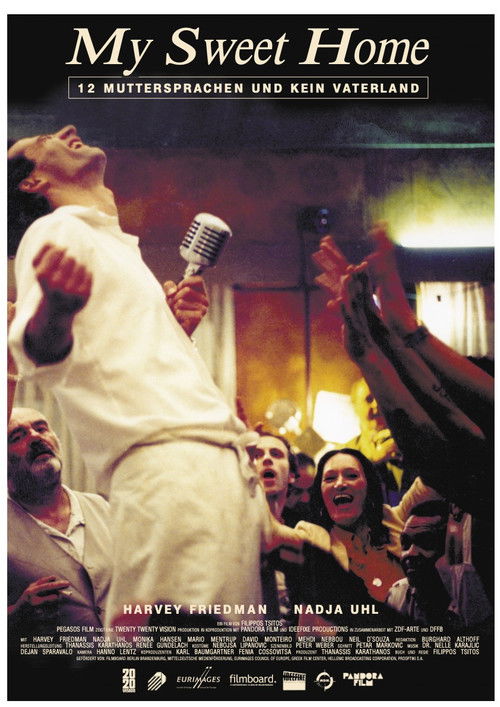
My Sweet Home is a character-driven story that emphasizes individual empowerment over traditional social structures. It creates a multicultural environment by incorporating immigrant perspectives into a Berlin setting. The film's strength lies in its subversion of domestic hierarchies, particularly through the female lead's autonomy. However, it lacks explicit LGBTQ+ representation and does not address characters with disabilities. Ultimately, the film shifts away from monocultural storytelling by focusing on the tension between globalized identities and established social norms.
Category Breakdown
The film centers on a romantic relationship between an American man and a German woman. There is no visible representation of LGBTQ+ identities or non-straight relationships.
Anke is a proactive protagonist who drives the plot through her desire for family. Her decision to expel her mother challenges traditional maternal roles and shows strong female empowerment.
Set in a Berlin café, the film showcases various immigrants, disrupting the depiction of a homogeneous European space by highlighting global migration patterns.
The narrative examines the breakdown of traditional family units and social tensions. It introduces cultural relativism through an American character interacting with German social customs.
The film does not include any characters dealing with physical, neurodivergent, or mental health conditions. There is no representation in this category.
Present on Screen
Limited or Absent
Official Synopsis
Berlin, A Polterabend (i.e. a party on the eve of a marriage) is taking place in a café. An American has persuaded his German friend to marry him, after just one month of knowing each other. But while Anke has decided to create a family for her and her baby, Bruce has reservations. The party's member consist of various immigrants that happened to be there, each with his own problems and Anke's mother who objects to the marriage and is expelled by her own daughter.
1999
1993

2013
2011

2000

2004
1996

2008
No reviews yet. Be the first to share your thoughts on this movie!
Use the rating form above to leave a star rating and optional review.