
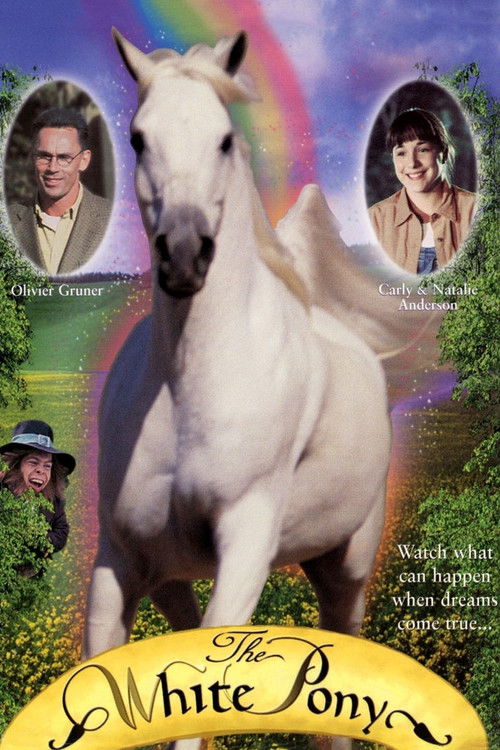
Pegasus: Pony With a Broken Wing
2019
No user ratings available yet
Representation score: 2.8 out of 10
Representation Score
Limited
1999
GDirector
Brian Kelly
Runtime
93 minutes
Average Rating
No ratings yetNew Showbiz Analysis
The White Pony is a conventional family fantasy that relies heavily on established mythological clichés. While it centers on a female protagonist, the narrative structure remains within traditional bounds of late-90s media. The film's cultural engagement is limited to localized Celtic folklore. It lacks the multi-layered approach required to move beyond a standard, homogeneous storytelling model. Ultimately, the film prioritizes traditional interpersonal dynamics and family-oriented archetypes over systemic critique or diverse representation.
Category Breakdown
The film does not include any LGBTQ+ characters or stories that challenge the assumption that everyone is straight or cisgender. The character dynamics focus on traditional family roles such as niece, uncle, and cousin.
Leah plays a significant role in driving the story as a female protagonist navigating a magical quest. However, the story maintains traditional hierarchies through the oversight of Uncle Jaques.
The setting draws on Irish ranch life and Celtic folklore. The narrative appears to focus on a homogeneous demographic typical of the era's family genre.
The story embraces Western folkloric traditions and magical realism. It follows a standard hero's journey without exploring secularist or anti-Western frameworks.
There is no portrayal of human neurodivergence or physical disability. The narrative focuses instead on animal injury and magical transformations.
Present on Screen
Limited or Absent
Official Synopsis
Leah is eager to visit her uncle's ranch in Ireland, until her attempt to ride her cold cousin Shannon's horse results in Silky being injured and she is ordered not to ride again. When she meets Lucky, a leprechaun who only communicates with her, she learns that the beautiful white beast she's glimpsed from afar is in fact a bewitched fairy Sorica, who needs help retrieving a magical horn to return to her true form and her own world. Now Leah must juggle secretly helping Lucky, whose reasons for helping might not just be out of kindness; putting up with Shannon; and trying to win Uncle Jaques' trust by entering her newfound "horse" in the local race.
2019
1979
2002
1996
2019
2023
1992
1989
No reviews yet. Be the first to share your thoughts on this movie!
Use the rating form above to leave a star rating and optional review.