
The Spider's Stratagem
1970
No user ratings available yet
Representation score: 6.4 out of 10
Representation Score
Fair
1995
PGDirector
Manoel de Oliveira
Runtime
91 minutes
Average Rating
No ratings yetNew Showbiz Analysis
Manoel de Oliveira’s film is a contemplative chamber drama that prioritizes psychological depth over demographic breadth. It challenges institutional hierarchies by focusing on the internal lives of its characters, particularly women navigating spiritual authority. However, the film remains limited by its European-centric focus and a lack of visible multi-layered casting. The narrative operates within a relatively homogeneous setting that lacks racial diversity. Ultimately, the work functions as a sophisticated philosophical inquiry. It uses the convent setting to explore the subjectivity of truth and the friction between intellectual inquiry and religious dogma.
Category Breakdown
The film hints at lives outside straight-centered expectations through subtext focused on repressed identity, though it does not explicitly depict queer ability to act.
The film centers on female experiences, avoiding the submissive nun cliché and highlighting intellectual and emotional autonomy among women.
The production features a relatively homogeneous Western European cast, reflecting a traditional aesthetic without significant non-white casting.
The film questions institutional authority and the search for truth, framing it as a challenge to the Western literary canon rather than a celebration of dogma.
The film does not prominently feature physical or neurodivergent disabilities as central plot drivers or character arcs.
Present on Screen
Limited or Absent
Official Synopsis
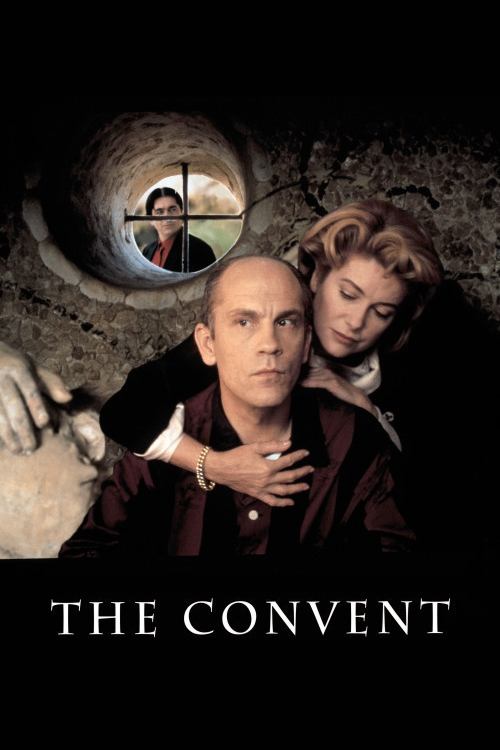
The journey of Michael Padovic, an American professor who arrives with his wife, Helene, at a Portuguese convent where he expects to find the documents needed to prove his theory: Shakespeare was born in Spain; not in England.
1970
1968

1968

1982

1991
1961

2007
2002
No reviews yet. Be the first to share your thoughts on this movie!
Use the rating form above to leave a star rating and optional review.