The Magic of Fellini
2002
No user ratings available yet
Diversity score: 4.5 out of 10
2018
Director
Claire Pijman
Runtime
86 minutes
Average Rating
No ratings yetSynopsis
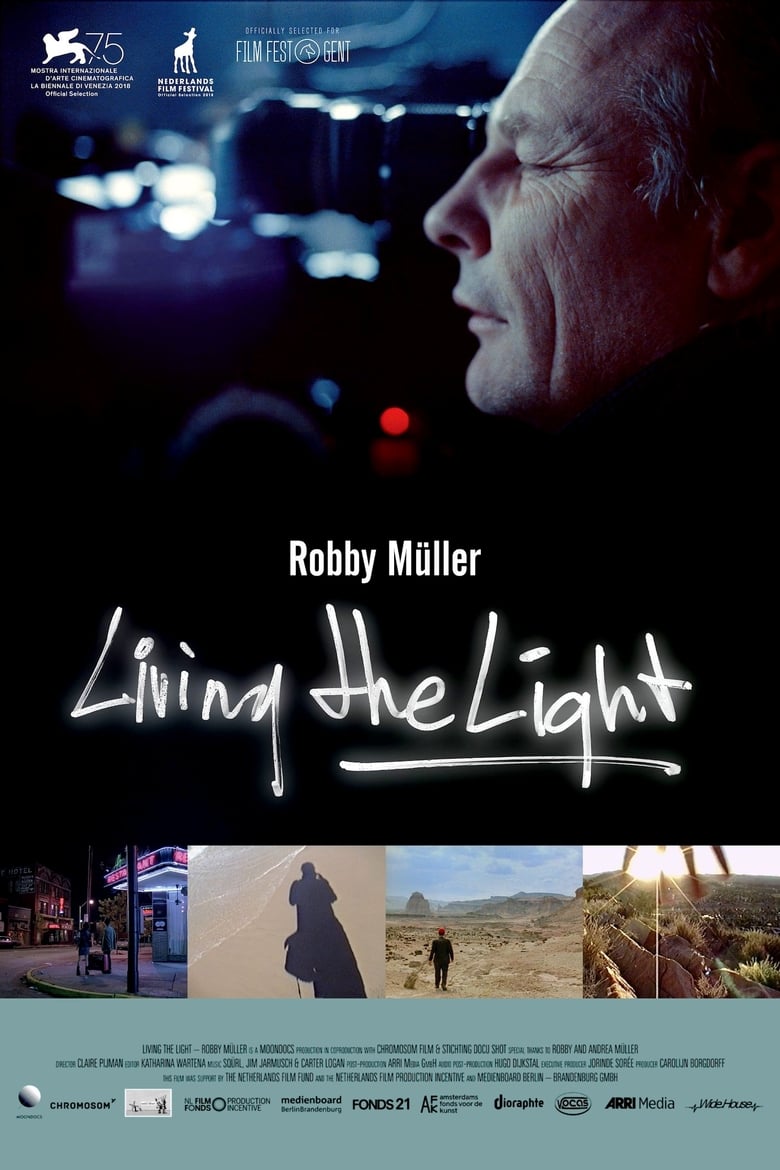
For her extraordinary film essay, Living the Light, Director and Director of Photography Claire Pijman had access to the thousands of Hi8 video diaries, pictures and Polaroids that Müller photographed while he was at work on one of the more than 70 features he shot throughout his career; often with long term collaborators such as Wim Wenders, Jim Jarmusch and Lars von Trier. The film intertwines these images with excerpts of his oeuvre, thus creating a fluid and cinematic continuum. In his score for Living the Light Jim Jarmusch gives this wide raging scale of life and art an additional musical voice.
Overall Score
Fair
Category Breakdown
LGBTQ+ Representation
The film lacks explicit LGBTQ+ character arcs or romantic subplots. Instead, it uses a non-linear, postmodern structure that rejects rigid, heteronormative storytelling in favor of fluid artistic expression.
Gender Representation
A female director, Claire Pijman, curates the legacy of a male cinematographer. This perspective shifts the power dynamics of the cinematic gaze by placing a woman in the analytical role.
Racial & Ethnic Diversity
The film reflects the European and American independent cinema circles of Müller's collaborators. It prioritizes universal visual textures and aesthetic experience over specific cultural or racial hierarchies.
Religious & Cultural Diversity
The documentary celebrates secular, artistic subjectivity over religious or institutional dogma. It focuses on the ephemeral nature of light and memory rather than traditional Western institutional stability.
Disability Representation
While disability is not an explicit focus, the film celebrates heightened neuro-sensory perception. It invites viewers to experience the world through a specialized, intense visual consciousness.
Strengths
Areas for Improvement
AI Analysis
Living the Light is a specialized cinematic essay that prioritizes aesthetic experience over identity-driven narrative. It functions as a study of light and texture rather than a traditional biography, which limits its ability to address specific social demographics through characterization. The film's strength lies in its structural subversion. By having a female director curate a male cinematographer's career, it subtly reconfigures industry power dynamics. Its postmodern approach also rejects rigid storytelling frameworks, favoring a fluid, subjective view of the world. However, the work remains rooted in the specific professional circles of Western independent cinema. Because it focuses on the technical and biographical legacy of a Dutch cinematographer, it lacks overt intersectional representation or diverse casting.
2002
2000
2002
2009
2012
2013

2006
1998
2015

1978
1994
2013
No reviews yet. Be the first to share your thoughts on this movie!
Use the rating form above to leave a star rating and optional review.