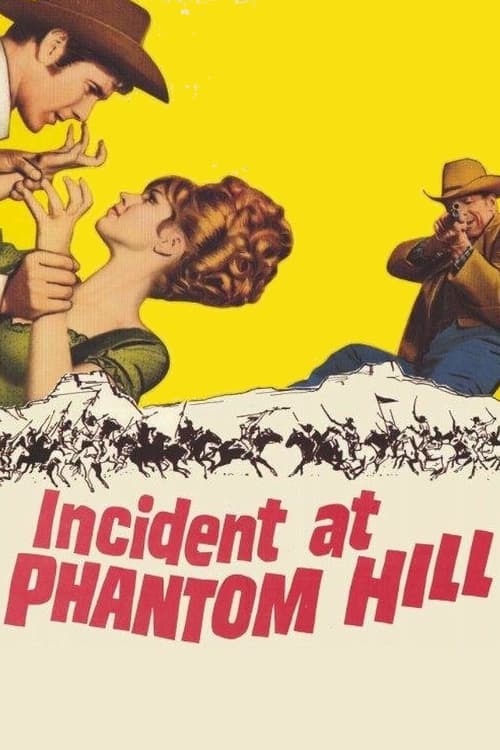
Incident at Phantom Hill
1966
No user ratings available yet
Representation score: 0.6 out of 10

Representation Score
Minimal
1967
TV-PGDirector
Osvaldo Civirani
Runtime
112 minutes
Average Rating
No ratings yetNew Showbiz Analysis
The film opens with the dust-choked landscape of a frontier wagon train, a visual shorthand for the 1960s spaghetti Western’s fascination with American mythology. Director Osvaldo Civirani’s *Rick and John, Conquerors of the West* is a low-budget production that leans heavily on genre conventions rather than subverting them. The narrative follows two naive drivers who inadvertently sell wagon wheels containing hidden gold, triggering a chain of events involving Confederate troops and indigenous resistance. The sold meaning is a celebration of rugged individualism and male competence, where the frontier serves as a testing ground for traditional virtues. The camera favors the male leads, framing their struggles as heroic quests against a chaotic backdrop. Barbara Carroll’s character functions as the moral compass and eventual reward for the protagonists’ survival, her presence validating the male journey rather than challenging it. The film’s internal logic is straightforward: violence is the primary tool for conflict resolution, and white settlement is the natural order. There is no satire that undermines the genre’s assumptions; instead, the film reinforces the legend of the West as a space where law and civilization triumph over chaos. The ending resolves the central conflict with the protagonists surviving and retaining their moral authority, a standard Western closure that affirms the status quo. The film does not interrogate the colonial implications of the frontier or the gender dynamics at play; it simply prints the legend. For a viewer seeking a critical examination of Western tropes, the film offers little beyond its aesthetic appeal. However, as a period piece, it faithfully represents the conventions of its time and genre, providing a clear, if unchallenging, view of 1960s Italian Western cinema.
Category Breakdown
No queer characters or same-sex intimacy appear. Relationships follow strict heterosexual period norms without subversion.
Barbara Carroll’s Virginia acts as the romantic prize and moral anchor. Men drive the plot through violence, leaving female characters without agency beyond supporting male arcs.
Indigenous people appear briefly as obstacles or background elements. The narrative centers white settler experiences, treating Native presence as a generic frontier hazard rather than a lived reality.
The War of Secession serves as a backdrop for individual heroism. Traditional Western values like law and male competence are presented as the natural moral order.
No characters display physical, sensory, or cognitive disabilities. The cast is physically able-bodied, with no impairment depicted as a narrative element or character trait.
Present on Screen
Limited or Absent
Official Synopsis
During the War of Secession, a northern army officer hides the gold necessary to purchase horses and weapons in the wagon's wheels. Unfortunately, the journey is more complicated than expected when the two naive drivers sell the wheels to an Indian, and the wagon gets attacked by southern troops!
1966
1969
1959
1965
1950
1966
1965

1967
No reviews yet. Be the first to share your thoughts on this movie!
Use the rating form above to leave a star rating and optional review.