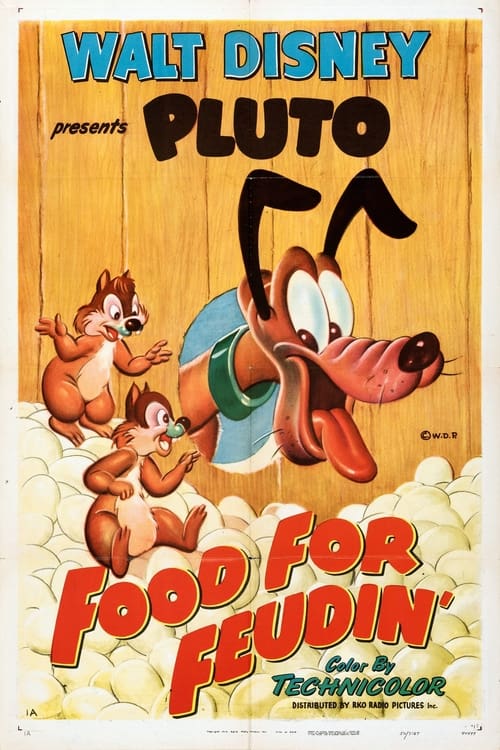
Food for Feudin'
1950
No user ratings available yet
Diversity score: 1.1 out of 10

1932
NRDirector
Burt Gillett
Runtime
7 minutes
Average Rating
No ratings yetSynopsis
Mickey is playing Christmas carols on a standup bass for change. Alas, all he gets is screws, rocks, and other useless stuff. He plays outside a rich man's window, and the spoiled brat kid inside decides he wants Pluto. Mickey isn't selling, but when his bass gets destroyed by a passing sleigh and he sees a house full of orphans with no presents, he changes his mind. Mickey plays Santa to the kids. Meanwhile, the brat has been torturing Pluto; his father finally has enough and throws Pluto out and spanks the child. Pluto and Mickey are reunited, and as a bonus, the kid has tied the Christmas turkey to Pluto's tail. (Also included: Chip an' Dale 1947, Lend a Paw 1941)
Overall Score
Limited
Category Breakdown
LGBTQ+ Representation
The film contains no depictions of non-heteronormative identities or queer themes. Character dynamics remain centered on traditional social structures.
Gender Representation
The narrative focuses almost entirely on male-coded characters like Mickey and the father figure. There is a notable lack of female agency or presence in the plot.
Racial & Ethnic Diversity
The cast consists of a homogeneous group of anthropomorphic animals and human archetypes. The setting lacks meaningful racial blending or non-Anglo-Saxon representation.
Religious & Cultural Diversity
The story explores class disparity through the lens of a Christmas celebration. It reinforces traditional Western values of charity and moralistic storytelling.
Disability Representation
There are no visible or invisible disabilities portrayed. Characters function within standard physical and neurotypical parameters.
Strengths
Areas for Improvement
AI Analysis
Mickey's Good Deed is a product of its 1932 historical context, prioritizing character-driven slapstick and moral lessons over identity diversity. The narrative relies heavily on established tropes of the era, focusing on class tension and paternal authority. While the film offers a critique of economic hardship through Mickey's struggle as a street performer, it does so within a very narrow social framework. The story reinforces conservative social structures rather than challenging them. Ultimately, the film lacks the intentionality required to represent diverse identities, functioning instead as a traditional study of morality and class dynamics.
1950

1951
1940
1964
1936
1932
1947
1998
1992
1991
1934
1936
No reviews yet. Be the first to share your thoughts on this movie!
Use the rating form above to leave a star rating and optional review.