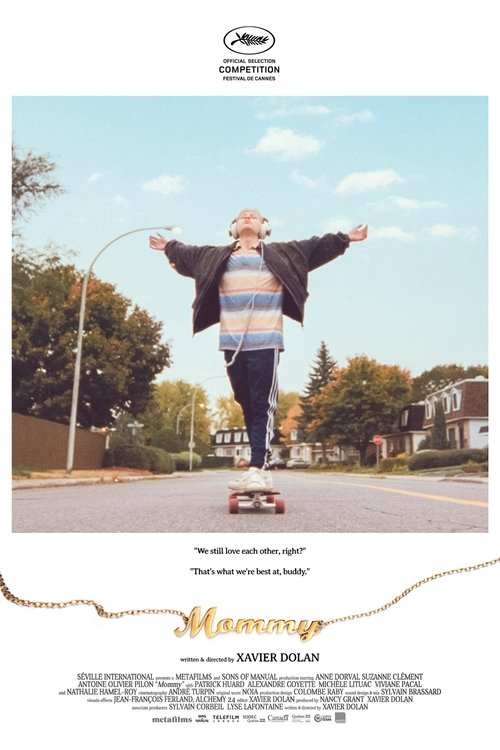
Mommy
2014
No user ratings available yet
Representation score: 8.1 out of 10

Representation Score
Fair
2009
Not RatedDirector
Xavier Dolan
Runtime
100 minutes
Average Rating
No ratings yetNew Showbiz Analysis
Xavier Dolan’s debut is a stylized exploration of the adolescent psyche, driven by the volatile relationship between a teenager and his mother. The film places queer identity and the subversion of maternal archetypes at the heart of its narrative structure. While the film offers deep psychological realism regarding identity and family dysfunction, it remains a localized character study. The lack of racial diversity keeps the focus on a specific Montreal social context, limiting its broader multi-layered scope. Ultimately, the work succeeds as a progressive deconstruction of social norms, using the protagonist's internal conflicts to challenge traditional views on familial duty and morality.
Category Breakdown
The film centers on Hubert's attraction to men, which drives the core themes of longing and alienation. Queer identity is a central part of the story.
Diane, the mother, is portrayed as emotionally erratic and impulsive, challenging the traditional nurturing maternal archetype and highlighting psychological complexity.
The cast is predominantly white and reflects a specific Montreal social context. The film does not include diverse racial backgrounds or explore multi-layered racial dynamics.
The story questions the sanctity of the nuclear family, presenting it as a source of trauma. It emphasizes situational ethics over traditional moral hierarchies.
The film focuses on universal adolescent issues and relational trauma. It does not specifically address diagnosed physical or neurodivergent disabilities as key elements of the plot.
Present on Screen
Limited or Absent
Official Synopsis
Hubert, a brash 17-year-old, is confused and torn by a love-hate relationship with his mother that consumes him more and more each day. After distressing ordeals and tragic episodes, Hubert will find his mother on the banks of Saint Lawrence river, where he grew up, and where a murder will be committed: the murder of childhood.
2014
2001
2016

2011
2013
2011
2011

2016
No reviews yet. Be the first to share your thoughts on this movie!
Use the rating form above to leave a star rating and optional review.