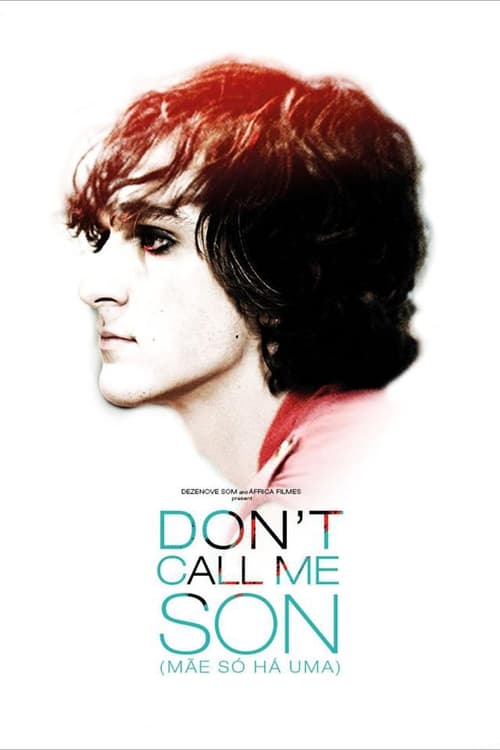
Little Wing
2016
No user ratings available yet
Representation score: 5.9 out of 10
Representation Score
Good
2016
UnratedDirector
Anna Muylaert
Runtime
82 minutes
Average Rating
No ratings yetNew Showbiz Analysis
Anna Muylaert uses a character-driven drama to deconstruct traditional family structures and domestic hierarchies. By focusing on Pierre's gender exploration and his mother's destabilizing secrets, the film challenges conventional social expectations. The film excels in its nuanced portrayal of identity and the disruption of the idealized family unit. It moves past surface-level representation to explore the moral complexities of biological legitimacy and maternal authority. While the film offers a deep social critique, the specific racial composition of the ensemble remains unstated, leaving the breadth of its ethnic representation somewhat undefined in the current overview.
Category Breakdown
The film focuses on Pierre, a teenager who questions traditional masculinity through private rituals like wearing women's clothing. This approach goes beyond including someone from a minority group without giving them real depth to challenge the assumption that everyone is straight or cisgender.
Aracy's maternal authority disrupts traditional patriarchal hierarchies. Pierre's exploration of gender further complicates conventional masculine roles, presenting them as fluid rather than fixed.
As a localized Brazilian drama, the film likely reflects its setting's social fabric. However, the provided details do not explicitly indicate a non-white majority cast.
The narrative critiques the sanctity of the traditional nuclear family by framing a mother's secret as a catalyst for identity crisis. It prioritizes individual truth over institutional stability.
There is no explicit mention of characters possessing visible or invisible disabilities within the narrative.
Present on Screen
Limited or Absent
Official Synopsis
Pierre is seventeen and in the middle of puberty. He plays in a band, has sex at parties and secretly tries on women’s clothing and lipstick in front of a mirror. Ever since his father’s death, his mother Aracy has looked after him and his younger sister Jacqueline, spoiling them both. But when he discovers that she stole him from a hospital when he was a new born baby, Pierre’s life changes dramatically. In her new film, director Anna Muylaert explores the mother-child relationship through the eyes of a rebellious son whose whole world unravels overnight.
2016

2018

2013

2016
2016

2023

2009
2015
No reviews yet. Be the first to share your thoughts on this movie!
Use the rating form above to leave a star rating and optional review.