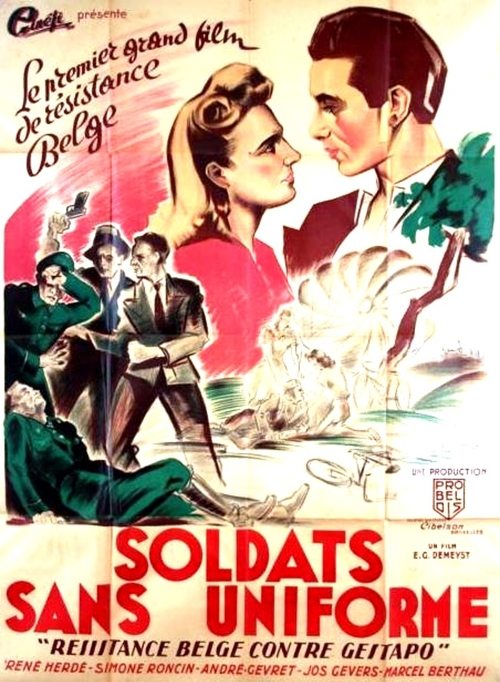
Soldats sans uniforme
1944
No user ratings available yet
Representation score: 0.0 out of 10
No Poster Available
Representation Score
Minimal
1960
12Director
Paul May
Average Rating
No ratings yetNew Showbiz Analysis
Produced in 1960, *Soldatensender Calais* functions as a product of its temporal context. The film appears to reinforce traditional social hierarchies and Western institutional norms rather than challenging them. The narrative structure lacks visible representation of multiple aspects of identity. It prioritizes conventional storytelling over the deconstruction of established cultural or gender norms, reflecting the era's standard dramatic frameworks. Without specific evidence of character arcs or thematic subversion, the film remains a reflection of mid-century cinematic homogeneity.
Category Breakdown
The film does not include any characters with verified non-straight identities. There are no narratives that question the assumption that everyone is straight or cisgender.
The production likely follows conventional gender roles typical of 1960. There is no indication of women having significant influence or challenging male leadership.
Casting likely reflects the homogeneous demographic standards of mid-century European cinema. There is no evidence of significant non-white representation or actors being cast in roles traditionally expected to match their background.
The film aligns with standard Western dramatic traditions of the era. It lacks indications of systemic critique or secular themes, favoring established social structures.
There is no information regarding the inclusion of neurodivergent or physically disabled characters. Their roles within the narrative remain unaddressed.
Present on Screen
Limited or Absent
1944

1975
1956
1958

1944

1945
1938
1975
No reviews yet. Be the first to share your thoughts on this movie!
Use the rating form above to leave a star rating and optional review.