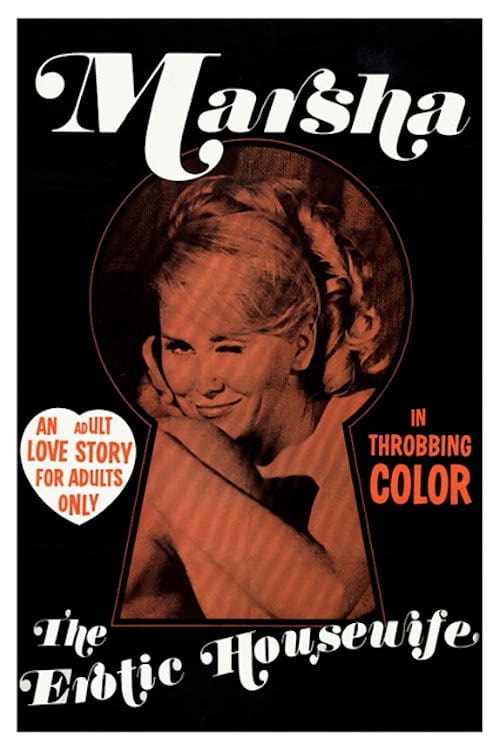
Marsha: The Erotic Housewife
1970
No user ratings available yet
Representation score: 2.6 out of 10
Representation Score
Limited
1970
RDirector
Jean Van Hearn
Runtime
101 minutes
Average Rating
No ratings yetNew Showbiz Analysis
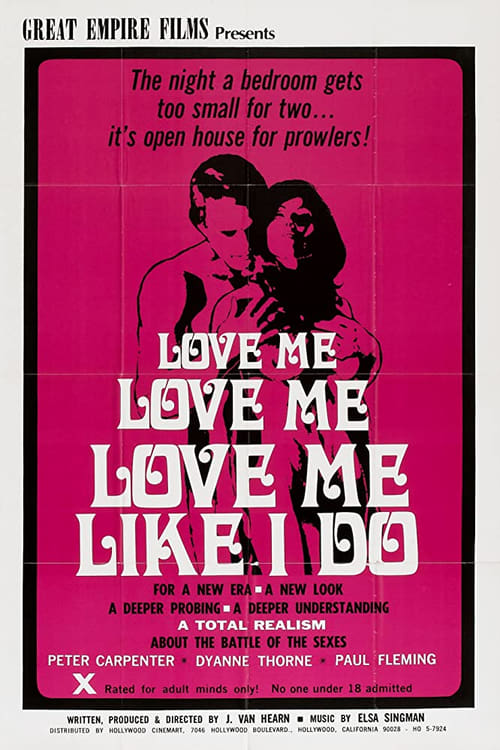
Love Me Like I Do is a period drama centered on the disruption of a seemingly perfect suburban life. The narrative focuses on a wife's discovery of her husband's infidelity, placing the emotional weight on a female protagonist navigating a domestic crisis. However, the film appears deeply rooted in conventional mid-century social structures. The lack of visible racial diversity and the absence of LGBTQ+ representation suggest a narrow, traditionalist worldview common to its era. While the film offers a glimpse into the internal experience of a woman facing betrayal, it lacks the complexity needed to move beyond standard domestic clichés.
Category Breakdown
The film does not include any explicit LGBTQ+ characters or non-straight relationships. The story centers on a heterosexual marriage and domestic issues.
Sharon's perspective drives the narrative as she deals with her husband's betrayal. It is unclear if the film challenges traditional gender roles or relies on the scorned woman cliché.
The suburban setting suggests a potentially homogeneous social environment. There is no indication of racial diversity or diverse casting within the provided details.
The story critiques the facade of perfect Western domesticity through the lens of a crumbling nuclear family. It lacks broader anti-institutional or cultural themes.
There is no information regarding the inclusion of characters with physical or neurodivergent disabilities.
Present on Screen
Limited or Absent
Official Synopsis
Sharon is a seemingly contented suburban wife with a nice husband, house and family, until she discovers that her husband is cheating on her with the neighborhood nympho.
1970

1964

1979

1965

1978
1968

1973
1971
No reviews yet. Be the first to share your thoughts on this movie!
Use the rating form above to leave a star rating and optional review.