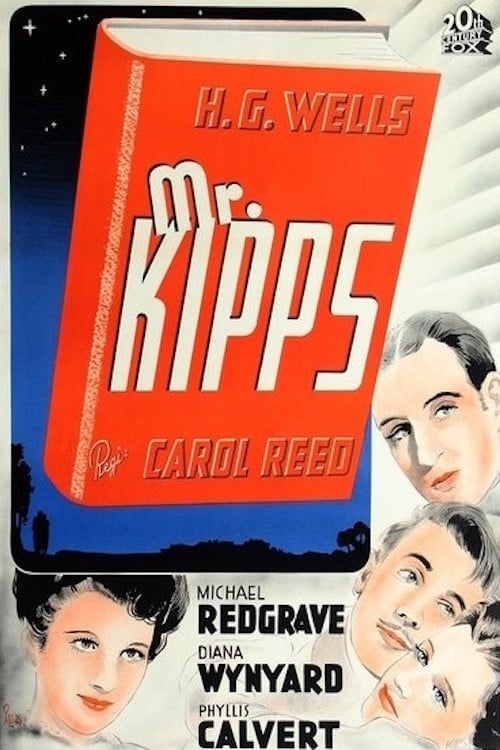
Kipps
1941
No user ratings available yet
Diversity score: 2.4 out of 10

1938
Director
Carol Reed
Runtime
86 minutes
Average Rating
No ratings yetSynopsis
A 1930s British summer Bank Holiday starts at midday on Saturday with a rush for the trains to the seaside. Doreen and Milly are off to a beauty contest, Geoffrey and Catherine are having an illicit weekend in the Grand Hotel and May and the kids are set for a more straightforward holiday of sea, sand, and pub. Meanwhile, the manager and performers on the pier are praying for rain.
Overall Score
Limited
Category Breakdown
LGBTQ+ Representation
The film lacks explicit LGBTQ+ characters or non-heteronormative identities. Interpersonal dynamics focus on traditional romantic pairings and familial structures typical of the 1930s.
Gender Representation
Women like Doreen and Milly exercise agency through a beauty contest, yet the film largely reinforces conventional gender roles. Men occupy professional or labor-oriented roles, adhering to established social hierarchies.
Racial & Ethnic Diversity
The cast reflects a homogeneous demographic consistent with 1938 British social realism. The narrative focuses on socioeconomic class rather than racial or ethnic diversity.
Religious & Cultural Diversity
The story depicts traditional Western social structures, emphasizing British working and middle-class communal experiences. It observes institutions like the family and pub culture as stabilizing community fabrics.
Disability Representation
There is no significant presence of characters with visible or invisible disabilities. Characters function within the standard physical and neurotypical parameters of the era's dramatic conventions.
Strengths
Areas for Improvement
AI Analysis
Bank Holiday serves as a period-accurate mirror of 1930s British society, prioritizing the study of class dynamics over identity-based disruption. It captures the interconnectedness of urban life through a lens of social realism. The film adheres strictly to the era's social hierarchies, offering little representation for LGBTQ+ individuals or people with disabilities. Its focus remains on the traditional structures of the time. While the film provides a nuanced look at socioeconomic variety, it does not challenge the prevailing racial, gender, or cultural norms of the period.
1941

1933

1938

1950

1964
1937

1937

1939

1929
1939
1939

2006
No reviews yet. Be the first to share your thoughts on this movie!
Use the rating form above to leave a star rating and optional review.