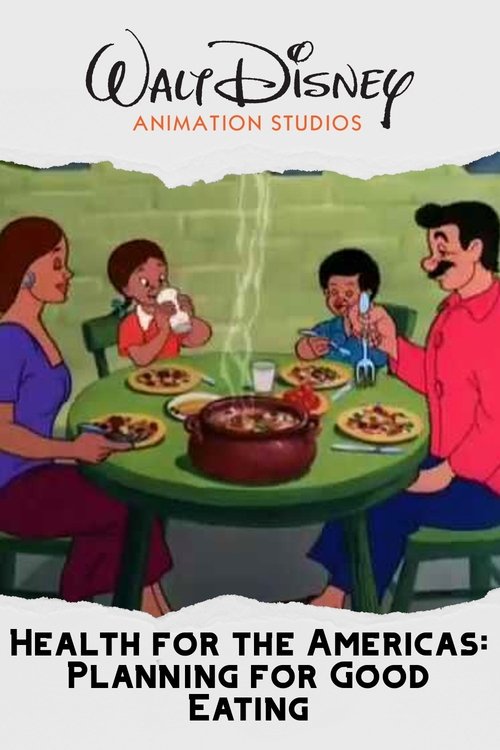
Health for the Americas: Planning for Good Eating
1946
No user ratings available yet
Representation score: 3.6 out of 10
Representation Score
Limited
1945
NRRuntime
10 minutes
Average Rating
No ratings yetNew Showbiz Analysis
This Disney animated short serves as a historical artifact of mid-1940s educational filmmaking. Its primary purpose is the dissemination of scientific and hygienic information to support public health initiatives and wartime civic duty. The film prioritizes biological safety and institutional stability over exploring diverse identities. Consequently, it reinforces the established social and biological norms of its era rather than challenging them. Because the subject matter is strictly clinical and preventative, the narrative lacks the complexity required to address diverse social identities or subvert systemic power dynamics.
Category Breakdown
The film functions as a clinical, instructional tool regarding hygiene. It contains no evidence of LGBTQ+ identities or stories that challenge the assumption that everyone is straight or cisgender.
The film likely adheres to traditional 1940s gender roles. It often portrays domestic hygiene through a feminine lens or authority through a masculine lens.
The production reflects the demographic norms of 1945. It likely utilizes homogeneous casting or archetypes that mirror the prevailing social structures of the era.
The narrative aligns with Western institutional authority. It promotes the stability of social institutions and civic responsibility rather than progressive or anti-institutional frameworks.
Illness is treated as a biological threat to be managed. This framing focuses on bodily vulnerability rather than treating disability as a lived identity with real power.
Present on Screen
Limited or Absent
Official Synopsis
Disney animated educational film about staying safe from disease.
1946
1943

1942
1943

1962

1980
1940
1926
No reviews yet. Be the first to share your thoughts on this movie!
Use the rating form above to leave a star rating and optional review.