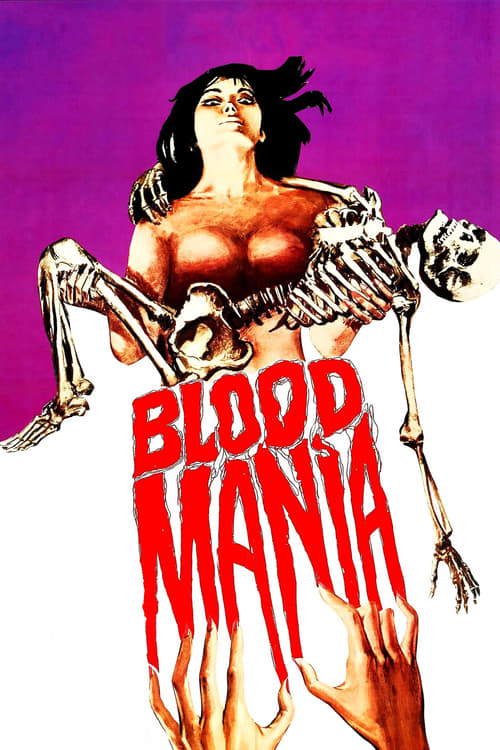
Blood Mania
1970
No user ratings available yet
Diversity score: 2.8 out of 10

1970
Director
Jack Bravman, Roberta Findlay, Michael Findlay
Runtime
65 minutes
Average Rating
No ratings yetSynopsis
A sadistic teenager searching for "Daddy" murders and dismembers anybody who picks her up hitch-hiking.
Overall Score
Minimal
Category Breakdown
LGBTQ+ Representation
The film lacks LGBTQ+ characters or narratives. It focuses on individual psychopathy rather than exploring identity or critiquing heteronormativity.
Gender Representation
A female protagonist disrupts the traditional male-predator slasher trope. However, her agency is rooted in sadism rather than a meaningful subversion of gender hierarchies.
Racial & Ethnic Diversity
The production reflects the homogeneous casting practices typical of 1970s low-budget exploitation cinema. There is no evidence of significant racial blending.
Religious & Cultural Diversity
The story deconstructs the nuclear family through themes of familial dysfunction. This exploration is framed as psychological horror rather than a systemic critique.
Disability Representation
There is no evidence of characters with visible or invisible disabilities being portrayed with agency. The narrative remains centered on the protagonist's predatory actions.
Strengths
Areas for Improvement
AI Analysis
Janie operates as a transgressive exploitation piece rather than a work of social commentary. While it centers on a female killer, this choice serves horror tropes rather than progressive gender empowerment. The film's focus is strictly on individual trauma and psychopathy. The production lacks intersectional depth or intentionality regarding social hierarchies. It adheres to the era's homogeneous casting and focuses on genre-specific shock value over systemic critique. Ultimately, the film's narrative architecture is driven by the 'roughie' cinema movement, prioritizing transgressive themes over the subversion of power dynamics.
1970
1971

1976
1988

1987
1977
1992

2007
1981
2013

1996
1987
No reviews yet. Be the first to share your thoughts on this movie!
Use the rating form above to leave a star rating and optional review.