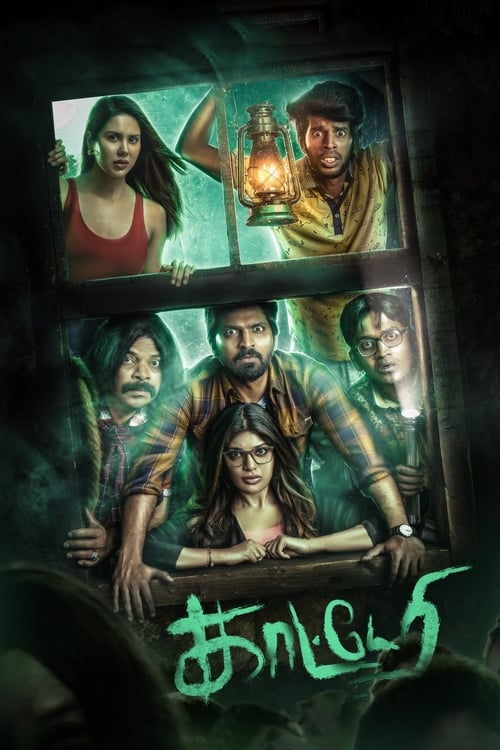
Kaatteri
2022
No user ratings available yet
Representation score: 3.1 out of 10

Representation Score
Fair
2004
Director
Shin Jung-won
Runtime
109 minutes
Average Rating
No ratings yetNew Showbiz Analysis
Shin Jung-won’s film is a work of psychological surrealism that prioritizes atmospheric dread over demographic breadth. It succeeds in challenging traditional gender clichés by focusing on a female protagonist's subjective experience of a hostile environment. However, the film remains a localized and homogeneous production. Its focus on a specific rural South Korean setting results in a lack of racial and ethnic diversity. Ultimately, the film's impact comes from its deconstruction of reality and genre clichés rather than its commitment to broad representation.
Category Breakdown
The film does not include explicit LGBTQ+ characters or non-cisgender identities. The narrative centers on psychological isolation and village tensions rather than any queer-coded subtext.
The story disrupts traditional gender hierarchies by centering a female protagonist's internal psychological state and actions. However, a lack of diverse female roles limits the scope.
Set in a rural South Korean village, the film depicts a largely homogeneous population. It functions as a localized study of community rather than an ensemble piece.
The narrative critiques social institutions by depicting a community that obscures truth. It uses moral relativism to blur the lines between reality and hallucination.
Themes of mental instability serve the film's surrealist horror tone. The portrayal stops short of providing a nuanced or ability to act-driven look at neurodivergence.
Present on Screen
Limited or Absent
Official Synopsis
Seok-tae runs away with a huge diamond of his gang and comes to Sisily, a peaceful village. Yang-e runs after him to get the diamond back and finds Seok-tae's trail in Sisily. But all the town people lie about everything. These people turn out to be scarier than a ghost!
2022
2013
2001
1998
2005
2025

2021

2024
No reviews yet. Be the first to share your thoughts on this movie!
Use the rating form above to leave a star rating and optional review.