
Running Blue
2001
No user ratings available yet
Diversity score: 7.6 out of 10
1978
Director
Pedro Olea
Runtime
100 minutes
Average Rating
No ratings yetSynopsis
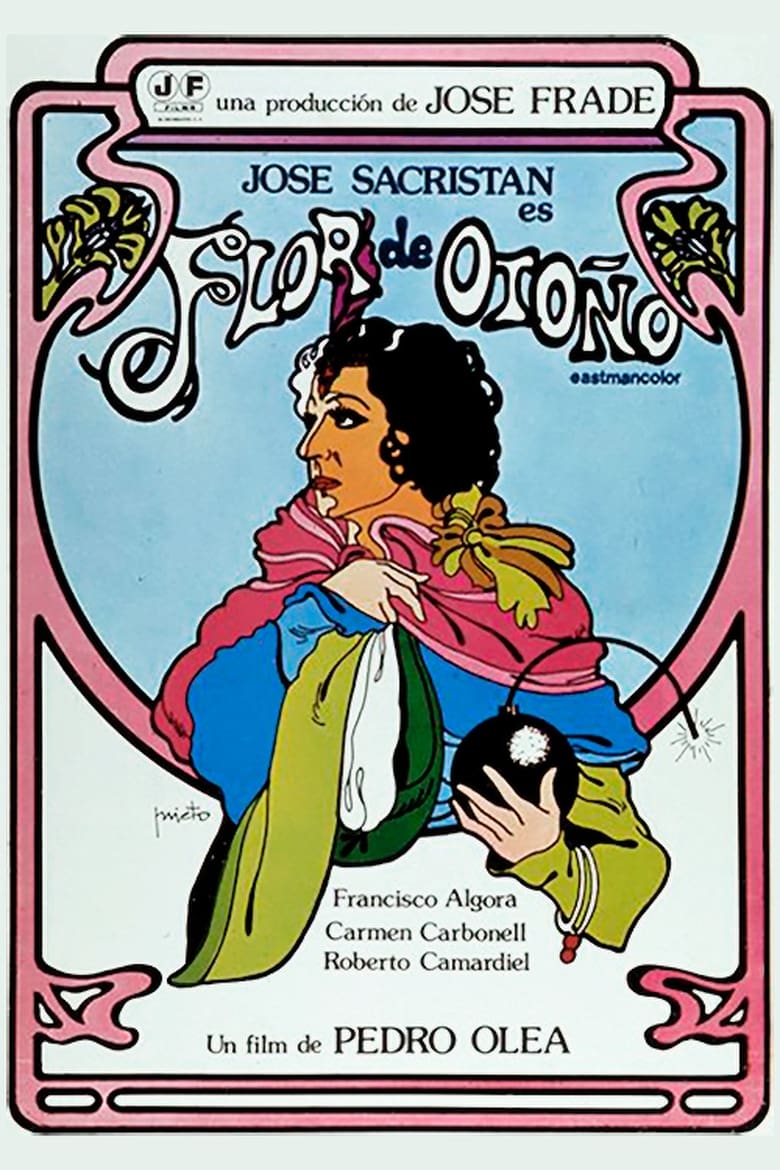
During the Primo de Rivera dictatorship, young, wealthy Lluis de Serracant leads a double life: by day he's a lawyer, and by night he's a transvestite performer known to his fans as "Flower of Autumn".
Overall Score
Good
Category Breakdown
LGBTQ+ Representation
The film centers on a protagonist navigating a profound gendered duality. By depicting a high-status professional living as a transvestite performer, it disrupts heteronormative expectations of masculinity.
Gender Representation
The narrative subverts traditional hierarchies by decoupling professional authority from gender performance. The protagonist's feminine persona challenges the rigid, patriarchal structures of the Primo de Rivera dictatorship.
Racial & Ethnic Diversity
The story focuses on class and gender dynamics within a specific Spanish socio-political framework. It lacks explicit evidence of multi-ethnic casting or racial intersectionality.
Religious & Cultural Diversity
The film critiques traditional Western institutional stability by pitting individual expression against state-sanctioned morality. It explores a truth existing outside sanctioned religious or political frameworks.
Disability Representation
There is no verifiable evidence regarding the portrayal of physical or neurodivergent disabilities in this work.
Strengths
Areas for Improvement
AI Analysis
A Man Called Autumn Flower serves as a significant work of narrative disruption. It utilizes the tension between a private self and a public persona to critique the restrictive social and political institutions of 1970s Spain. The film's strength lies in its refusal to adhere to conventional gender roles. It presents a complex study of identity that challenges the era's dominant power dynamics through the lens of a high-status professional's double life. While the film excels in exploring gender fluidity and cultural critique, it remains narrow in its racial scope, focusing primarily on internal Spanish social stratification and class dynamics.
2001
1986

2002

1978

1977
2009

2012

2020

2013
2022
1994

2006
No reviews yet. Be the first to share your thoughts on this movie!
Use the rating form above to leave a star rating and optional review.