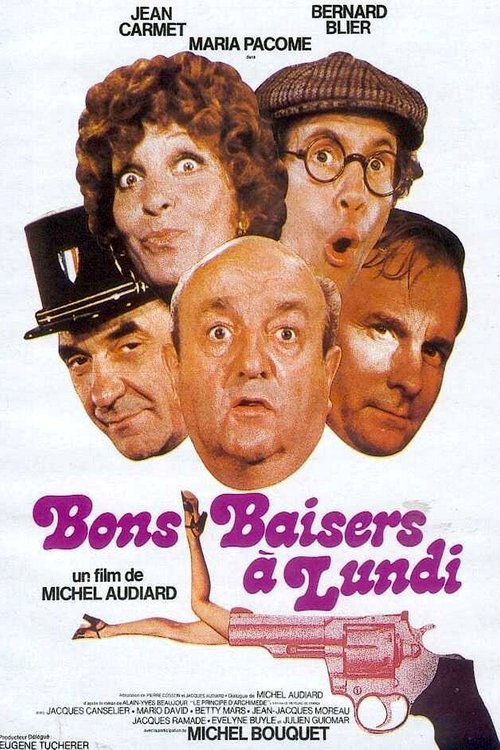
Kisses Till Monday
1974
No user ratings available yet
Representation score: 4.3 out of 10
Representation Score
Limited
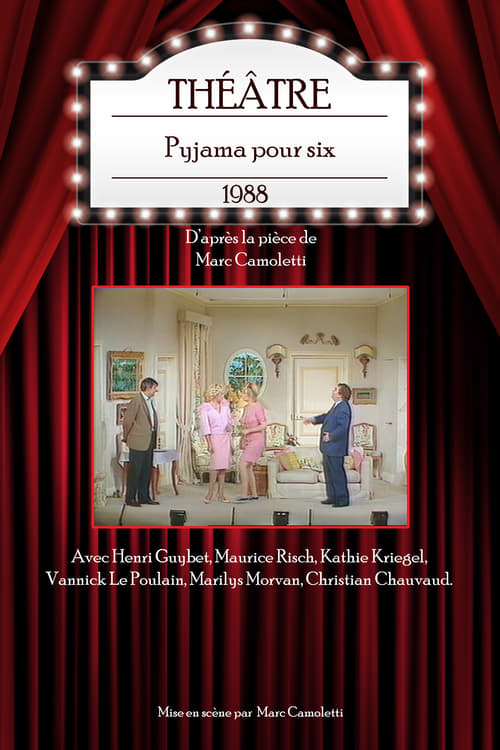
1988
Director
Marc Camoletti, Georges Folgoas
Average Rating
No ratings yetNew Showbiz Analysis
Pyjama pour six is a standard genre piece that relies on the traditional comedic structures of its era. It lacks the intentionality needed to disrupt social expectations or promote multi-layered representation. The film's demographic profile is largely homogeneous, mirroring the mainstream European cinema of the late 1980s. It focuses on situational humor rather than exploring diverse identities or systemic critiques. Ultimately, the work functions as a conventional comedy that adheres to established social norms rather than challenging them.
Category Breakdown
The film follows conventional comedic clichés without clear examples of non-straight or non-cisgender identities. It lacks narratives that actively challenge the assumption that everyone is straight or cisgender.
Female characters appear to function within established domestic or romantic archetypes typical of 1980s French cinema. The film does not significantly challenge traditional gender roles.
The production reflects the demographic homogeneity common in mainstream European comedies of the late 1980s. There is no focus on racial or ethnic diversity.
The narrative aligns with traditional Western comedic structures. It does not prioritize secular themes or deconstruct Western institutions through its moral framework.
Neurodivergence and physical disabilities are not central to the character arcs. Representation in this area appears to be absent.
Present on Screen
Limited or Absent
1974
1979
1982
1998
1997

1959
1994

2002
No reviews yet. Be the first to share your thoughts on this movie!
Use the rating form above to leave a star rating and optional review.